Modern MacBook Pro models, while sleek and powerful, often present a common challenge: a limited number of ports. This minimalist design, while aesthetically pleasing, can quickly become a bottleneck when you need to connect multiple essential peripherals for work or creative projects. If you’ve ever found yourself juggling adapters or constantly plugging and unplugging devices, a USB-C hub is the transformative solution you need. These versatile devices expand your MacBook Pro’s connectivity, allowing you to seamlessly integrate external monitors, traditional USB-A accessories, memory cards, and wired internet, all through a single port. Choosing the right USB-C hub can turn your laptop into a fully equipped workstation, boosting your productivity and enhancing your overall user experience.
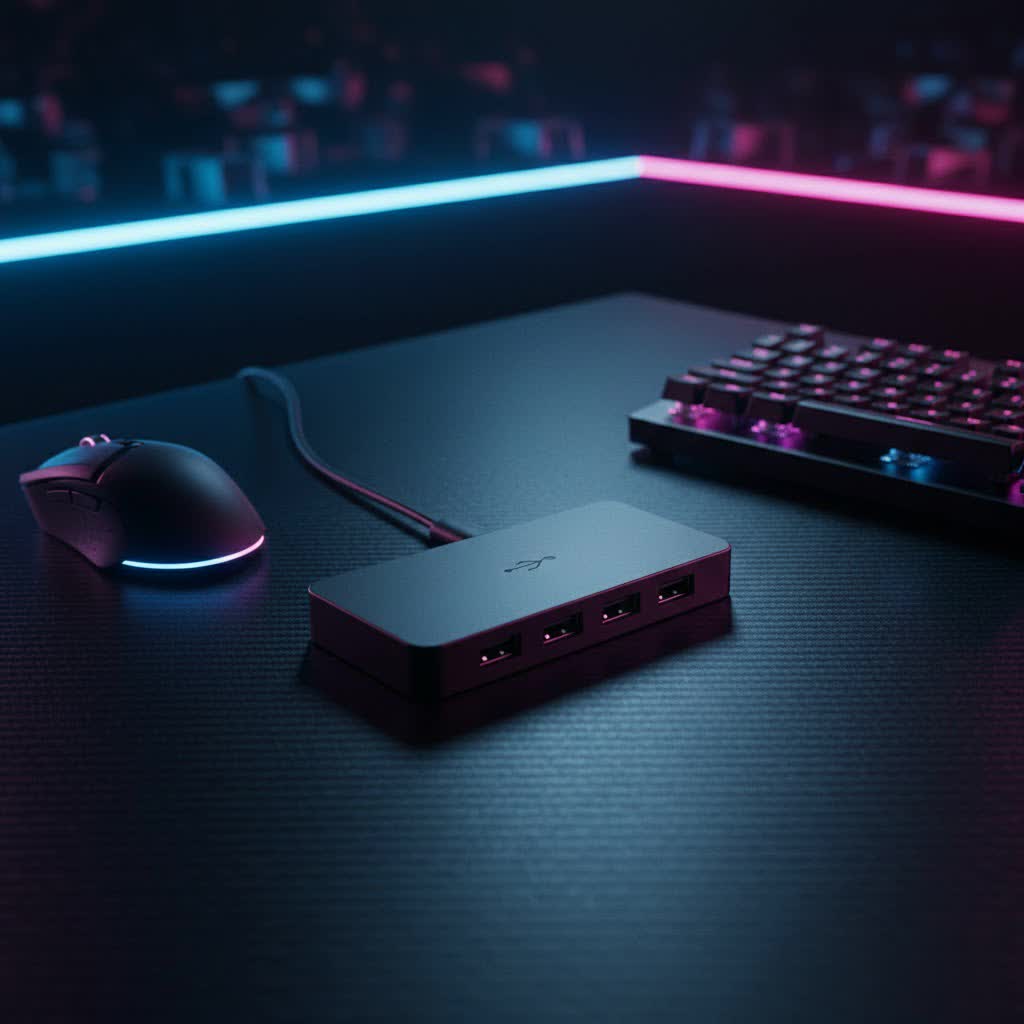
Overview of USB Hubs
What is a USB Hub?
|
Our Picks for the Best USB Hub in 2026
As an Amazon Associate I earn from qualifying purchases.
|
||
| Num | Product | Action |
|---|---|---|
| 1 | Anker USB Hub 4 Ports, Multiple USB 3.0 Hub, USB Splitter for Laptop, Extender for A Port Laptop, PC, Desktop and More [Charging Not Supported](2ft USB-A) |
 on Amazon](https://reviewhaat.com/wp-content/plugins/amazon-tables/assets/images/buy.png)
|
| 2 | Anker 555 USB-C Hub (8-in-1), with 85W Power Delivery, 4K 60Hz HDMI Port, 10Gbps USB C and 2 A Data Ports, Ethernet microSD SD Card Reader, for MacBook Pro More |
|
| 3 | 13 in 1 USB C Docking Station - Dual Monitor, Triple Display, 8 USB C/A Ports, Ethernet, Audio - LIONWEI USB C Hub for MacBook,Dell,HP,Lenovo,Surface |
|
| 4 | Acer USB Hub 4 Ports, Multiple USB 3.0 Hub, USBA Splitter for Laptop with Type C Power Port, Extender for A Port Laptop, PC, Desktop and More (2ft) |
|
| 5 | UGREEN USB 3.0 Hub, 4 Ports USB A Splitter Ultra-Slim USB Expander for Mouse, Keyboard, Flash Drive, U Disk, Printer Compatible with Laptop, Desktop PC, Xbox, PS5, and More |
|
| 6 | ONFINIO USB Hub 3.0, 7-Port USB Hub Splitter with Individual On/Off Switches and Lights, 3.2ft/1m Long Cable Compatible with MacBook, Laptop, Surface Pro, PS4, PC, Flash Drive, Mobile HDD |
|
| 7 | USB-C Hub 7-in-1 Multiport Adapter – 4K@30Hz HDMI, USB 3.0, USB 2.0, 100W PD Charging, SD/TF Card Reader – USB-C Docking Station for MacBook Pro/Air, Chromebook, Dell, HP & Type-C Devices |
|
| 8 | PWAY USB 2.0 Switch, USB Switcher Selector 2 Computers Sharing 4 USB2.0 Ports, KVM Switch Devices Peripheral Hub for Keyboard Mouse Printer Scanner Compatible with Windows Mac Linux |
|
| 9 | Acer USB C Hub, 7 in 1 Multi-Port Adapter for Laptop, 4K, HDMI Splitter with 2 USB A 3.1 & Type-C to HDMI Data Port, PD 100W Charging, SD Card Reader for Computer, Desktop, Space Grey |
|
| 10 | Powered USB Hub, Wenter 11-Port USB Splitter Hub (10 Faster Data Transfer Ports+ 1 Smart Charging Port) with Individual LED On/Off Switches, USB Hub 3.0 Powered with Power Adapter for Mac, PC |
|
A USB hub is a device that expands a single Universal Serial Bus (USB) port on a computer into multiple ports, allowing you to connect several peripheral devices simultaneously. Essentially, it acts as a splitter and an extender, enabling one USB port to function as many. Early USB hubs primarily offered additional USB-A ports, addressing the common need for more connection points for keyboards, mice, and flash drives. With the evolution of technology, especially the advent of USB-C, hubs have become significantly more advanced, incorporating a wider array of port types and advanced functionalities to meet the demands of modern computing.
Why Use a USB-C Hub for MacBook Pro?
The necessity of a USB-C hub for MacBook Pro users stems directly from Apple’s design philosophy, which prioritizes thinness and portability. While recent MacBook Pro models have re-introduced some ports, the primary connectivity remains USB-C/Thunderbolt, leaving users with a limited number of physical ports for their many devices. A USB-C hub solves this by providing:
- Expanded Connectivity: It instantly multiplies your available ports, allowing you to connect external displays, USB-A accessories, SD cards, and Ethernet.
- Enhanced Productivity: By enabling multi-monitor setups and persistent connections for all your peripherals, a hub streamlines your workflow and reduces setup time.
- Power Delivery: Many USB-C hubs offer Power Delivery (PD) pass-through, allowing you to charge your MacBook Pro while simultaneously using other connected devices through the hub, utilizing only one of your MacBook’s precious USB-C ports for both power and data.
- Convenience: Instead of carrying multiple single-purpose adapters, a single USB-C hub can handle all your connectivity needs, making it ideal for both desktop setups and users on the go.
Types of USB Hubs for MacBook Pro
USB-C hubs for MacBook Pro come in various forms, differentiated by their connection standards, power sources, and physical designs. Understanding these distinctions is crucial for selecting a hub that perfectly matches your specific needs.
USB Hubs by Connectivity Standard
The underlying USB standard determines the speed and capabilities of a hub. For MacBook Pro users, the focus is primarily on USB-C and its high-performance variant, Thunderbolt.
- USB 2.0: While still present on some older or very basic hubs for compatibility, USB 2.0 offers transfer speeds of up to 480 Mbps. It’s generally too slow for modern external drives or high-resolution displays.
- USB 3.0 (also known as USB 3.1 Gen 1 or USB 3.2 Gen 1): This standard provides speeds up to 5 Gbps. It’s common for connecting peripherals like keyboards, mice, and basic external hard drives. Many USB-A ports on modern hubs support this speed.
- USB 3.1 Gen 2 (also known as USB 3.2 Gen 2): Doubling the speed of USB 3.0, this standard offers up to 10 Gbps. It’s ideal for faster external SSDs and more demanding data transfer tasks.
- USB 3.2 Gen 2×2: Offers 20 Gbps data transfer speeds, utilizing two lanes of 10 Gbps. This is less common in typical USB-C hubs but found in some high-performance models.
- USB 4: The latest USB standard, USB 4, is built on the Thunderbolt 3 protocol and offers speeds up to 40 Gbps, aligning with Thunderbolt 3/4 capabilities. It supports power delivery and display connectivity. [cite: 4 (from search result)]
- Thunderbolt (3, 4, & 5): Thunderbolt ports share the physical USB-C connector but offer significantly higher bandwidth and capabilities.
- Thunderbolt 3 & 4: Both offer 40 Gbps data transfer speeds, which is eight times faster than USB 3.0. These are essential for professional users needing to connect high-speed external storage, multiple 4K displays, or external GPUs. [cite: 4 (from search result)]
- Thunderbolt 5: The newest iteration, offering up to 80 Gbps, with the potential for even higher speeds (up to 120 Gbps) in specific scenarios.
- Key Distinction: All Thunderbolt ports are physically USB-C, but not all USB-C ports are Thunderbolt. When a USB-C device is connected to a Thunderbolt port, it operates at USB-C speeds. [cite: 4 (from search result)] Thunderbolt hubs and docks provide a more robust and feature-rich experience, often with dedicated power supplies, making them suitable for complex desktop setups. [cite: 4 (from search result)]
USB Hubs by Power Source
How a USB hub receives power impacts its performance and the types of devices it can support.
- Bus-Powered USB Hubs: These hubs draw all their power directly from the host MacBook Pro via the USB-C connection.
- Pros: Highly portable, no need for an external power adapter, ideal for light use.
- Cons: Limited power output for connected devices. May not adequately power high-draw peripherals like external hard drives, resulting in unreliable connections or slower performance. Not suitable for charging the host MacBook.
- When to Use: Best for connecting low-power devices such as keyboards, mice, flash drives, or card readers when on the go.
- Self-Powered (or Externally Powered) USB Hubs: These hubs come with their own dedicated AC power adapter, providing independent power.
- Pros: Can supply consistent and ample power to all connected devices, supporting high-draw peripherals. Often include Power Delivery (PD) pass-through to charge the host MacBook. Better for stable data transfer and external displays.
- Cons: Less portable due to the need for a separate power adapter. Typically larger and more expensive.
- When to Use: Recommended for static desktop setups, connecting multiple power-hungry devices, or when simultaneous MacBook charging is required. Many advanced USB-C hubs and docking stations fall into this category.
USB Hubs by Form Factor
The physical design dictates portability and integration with your MacBook Pro.
- Integrated (Direct-Plug) USB-C Hubs: These hubs plug directly into one or two side-by-side USB-C ports on the MacBook Pro, often designed to sit flush with the laptop’s chassis.
- Pros: Very compact, clean aesthetic, ideal for minimalists or travel.
- Cons: Can block adjacent ports. May not be compatible with MacBook cases. Less flexible in placement.
- Wired USB-C Hubs: These hubs connect to the MacBook Pro via a short, integrated USB-C cable.
- Pros: More flexibility in placement on a desk, can be used with a MacBook in a case.
- Cons: Cable management might be a minor concern.
- Docking Stations: While technically an advanced form of USB-C hub (often leveraging Thunderbolt technology), docking stations are typically larger, designed for a static desktop setup, and offer the most extensive port selection and highest performance, including robust power delivery and multi-monitor support.
Essential Features of a MacBook Pro USB-C Hub
Choosing a USB-C hub requires careful consideration of the features that align with your workflow.
Power Delivery (PD) Charging Support
For MacBook Pro users, Power Delivery (PD) pass-through charging is one of the most critical features. A good USB-C hub will include a dedicated USB-C port for power input, allowing you to connect your MacBook’s charger to the hub. The hub then passes power through to your laptop while simultaneously powering all connected peripherals. Look for hubs that support at least 60W, 85W, or ideally 100W PD to efficiently charge your MacBook Pro, especially the 16-inch models which require higher wattage for optimal charging speed.
Video Output Capabilities
Many users rely on external monitors for increased screen real estate. USB-C hubs typically offer:
- HDMI: The most common video output, supporting various resolutions and refresh rates.
- 4K@30Hz: Common on basic hubs, suitable for general use but might feel less fluid for fast-moving content.
- 4K@60Hz: Provides a smoother visual experience, ideal for video editing, gaming, and general productivity. Many quality hubs offer this.
- 8K@30Hz or 8K@60Hz: Available on premium, high-bandwidth hubs, often leveraging Thunderbolt or USB 4 for ultra-high-resolution displays.
- DisplayPort (DP): Less common than HDMI on basic hubs but offers similar high-resolution capabilities.
- Dual Monitor Support: Some advanced hubs or docking stations allow for connecting two (or more) external displays simultaneously, crucial for professional workstations. Note that Apple Silicon M1/M2 MacBooks (non-Pro/Max/Ultra chips) often natively support only one external display, regardless of the hub’s capabilities.
Data Transfer Ports
To connect your existing peripherals, your hub will need various data ports:
- USB-A Ports (USB 3.0/3.1 Gen 1/3.1 Gen 2): For connecting legacy devices like external hard drives, flash drives, keyboards, mice, and printers. Speeds usually range from 5 Gbps to 10 Gbps.
- USB-C Data Ports: Beyond the PD charging port, some hubs include additional USB-C ports for data transfer, allowing you to connect newer USB-C accessories or external SSDs that benefit from higher speeds.
SD and MicroSD Card Readers
For photographers, videographers, and anyone who frequently transfers files from cameras or other devices, integrated SD and microSD card slots are indispensable. Look for hubs that support high-speed standards like UHS-I or UHS-II for faster offloading of large files.
Ethernet Port
While Wi-Fi is convenient, a wired Ethernet connection offers superior speed and stability, which is critical for large file transfers, online gaming, or stable video conferencing. Most hubs offer Gigabit Ethernet (1 Gbps), while some high-end models feature 2.5 Gbps Ethernet for even faster wired network performance.
macOS Compatibility
Always ensure the USB-C hub explicitly states compatibility with macOS, particularly with newer Apple Silicon chips (M1, M2, M3). Some hubs may require specific drivers, although most are plug-and-play. Compatibility issues can manifest as unreliable connections, display problems, or features not working as expected.
Comparison of USB-C Hub Features
| Feature | Basic USB-C Hub (Bus-Powered) | Standard USB-C Hub (Wired, PD) | Advanced USB-C Hub/Dock (Self-Powered, Thunderbolt) |
|---|---|---|---|
| Power Source | Bus-powered (from MacBook) | Bus-powered, with PD pass-through | Self-powered (external adapter) |
| PD Charging | None (uses a MacBook port) | 60W-100W pass-through | 85W-100W+ pass-through, often more robust |
| Video Output | Up to 4K@30Hz (single) | Up to 4K@60Hz (single) | Dual 4K@60Hz, single 8K@60Hz, DisplayPort |
| Data Transfer | USB 3.0 (5Gbps) USB-A | USB 3.0/3.1 Gen 2 (5-10Gbps) USB-A/USB-C | Thunderbolt (40-80Gbps), USB 3.2 Gen 2×2 |
| Port Quantity | 3-5 ports | 5-8 ports (USB-A, HDMI, SD/microSD, Ethernet) | 8-15+ ports (more USB-C/Thunderbolt, DP, Audio) |
| Ethernet | Rarely included or 100Mbps | Gigabit (1Gbps) | Gigabit or 2.5Gbps, often more stable |
| Card Readers | SD/microSD (UHS-I) | SD/microSD (UHS-I) | SD/microSD (UHS-II) |
| Form Factor | Integrated (direct-plug) or small wired | Wired, portable | Wired, larger desktop unit |
| Price Range | Budget-friendly | Mid-range | Premium |
How to Choose the Right USB-C Hub for Your MacBook Pro (Buying Guide)
Selecting the ideal USB-C hub involves a strategic assessment of your specific needs and a careful comparison of available options.
1. Determine Your Usage Needs
Start by listing the devices you regularly connect or intend to connect to your MacBook Pro.
- Peripherals: Do you need to plug in a traditional mouse, keyboard, printer, or external webcam (USB-A)?
- Storage: Do you use external hard drives or SSDs? What data transfer speeds do you require for them?
- Displays: How many external monitors do you use? What resolutions (e.g., 1080p, 4K, 8K) and refresh rates (e.g., 30Hz, 60Hz) do they support? Do you need dual monitor support?
- Networking: Is a stable wired internet connection via Ethernet crucial for your work or home setup?
- Media: Do you frequently transfer photos or videos from SD/microSD cards?
- Portability: Do you need a compact hub for travel, or a more robust solution for a fixed desk setup?
2. Choose the Right Connectivity Standard
- For Everyday Use & Basic Expansion: A standard USB-C hub with USB 3.0/3.1 Gen 2 ports, HDMI (4K@60Hz), PD charging, and card readers will suffice for most users.
- For High Performance & Advanced Workflows: If you work with large files, need multiple high-resolution displays, or require an external GPU, a Thunderbolt hub or docking station is a superior choice. These leverage the full bandwidth of your MacBook Pro’s Thunderbolt ports.
3. Prioritize Power Delivery (PD)
Always choose a hub with PD pass-through charging if you intend to charge your MacBook Pro through it. Verify that the hub’s PD wattage output (e.g., 85W, 100W) is sufficient for your specific MacBook Pro model to ensure efficient charging. Insufficient wattage may lead to slow charging or battery drain under heavy load.
4. Evaluate Port Selection and Speeds
Match the hub’s ports to your identified needs.
- USB-A Ports: Ensure there are enough and that they support at least USB 3.0 (5 Gbps) for decent speeds.
- Video Ports: Check the HDMI/DisplayPort version and ensure it supports the resolution and refresh rate of your external monitor(s). If you have an Apple Silicon Mac (M1/M2 base models), be aware of its native single external display limit.
- Ethernet: Opt for Gigabit Ethernet (1 Gbps) for reliable wired internet.
- Card Readers: Look for UHS-I or UHS-II support for faster media transfers.
5. Consider Form Factor and Build Quality
- Portability: For travel, an integrated or compact wired hub is ideal.
- Desktop: For a static setup, a larger wired hub or a full docking station can offer more ports and better cable management.
- Build Quality: Invest in hubs from reputable brands known for their durability and reliable performance. Avoid excessively cheap, generic hubs, as poor quality can lead to performance issues, overheating, and potential damage to your MacBook Pro. [cite: 2 (from previous search result)] Look for hubs with aluminum casings for better heat dissipation and robust connectors.
6. Read Reviews and Check Compatibility
Before purchasing, always check recent reviews from other MacBook Pro users, especially those with the same model as yours (e.g., M1, M2, M3 chip). Pay attention to feedback regarding compatibility, performance under load, and any reported issues.
Common Issues & Troubleshooting with USB-C Hubs
While USB-C hubs are incredibly useful, users may occasionally encounter issues. Understanding common problems and their solutions can save time and frustration.
Connectivity and Device Recognition Problems
- Issue: Devices connected to the hub are not recognized, or connections are intermittent.
- Troubleshooting:
- Check Cables and Ports: Ensure all cables are fully seated and free from damage. Inspect the MacBook Pro’s USB-C port for any dust or debris; gently clean with compressed air if necessary. [cite: 1 (from previous search result)]
- Test Individual Components: Connect the peripheral directly to your MacBook Pro (if possible) to rule out the device or cable as the source of the problem.
- Restart Mac and Hub: A simple reboot of your MacBook Pro and unplugging/replugging the hub can often resolve temporary software glitches. [cite: 1 (from previous search result)]
- Driver/Firmware Updates: Check the hub manufacturer’s website for any available driver or firmware updates, especially after macOS updates.
Charging Issues
- Issue: MacBook Pro is not charging, or charging is significantly slower when connected through the hub.
- Troubleshooting:
- Verify PD Wattage: Ensure the hub’s Power Delivery output is sufficient for your MacBook Pro’s power requirements. High-performance tasks can draw more power than a lower-wattage hub can provide, leading to slow charging or battery drain.
- Use Original Charger: Always use your MacBook Pro’s original power adapter (or a compatible high-wattage third-party one) connected to the hub’s PD input port.
- Hub Overload: Disconnect power-hungry devices from the hub to see if charging improves.
Overheating
- Issue: The USB-C hub becomes excessively hot during use.
- Troubleshooting:
- Reduce Load: Disconnect unnecessary peripherals or devices with high power draw.
- Ensure Airflow: Make sure the hub has adequate ventilation and isn’t covered or obstructed.
- Quality Check: Persistent overheating can be a sign of a poorly designed or low-quality hub that lacks proper thermal management. In such cases, consider replacing it with a more reputable brand. [cite: 2 (from previous search result)]
Risks Associated with Cheap, Low-Quality Hubs
It’s crucial to be aware that not all USB-C hubs are created equal. Extremely cheap, generic hubs can pose risks to your MacBook Pro.
- Poor Power Regulation: Low-quality hubs may lack essential Power Delivery (PD) controllers or proper circuit protection, leading to inconsistent voltage delivery or even over-voltage, which can damage your MacBook Pro’s internal components. [cite: 2 (from previous search result)]
- Reverse Power Flow: Some poorly designed hubs can accidentally push power into the MacBook’s ports that are not designed to receive it, stressing internal circuits and potentially causing long-term damage. [cite: 2 (from previous search result)]
- Early M1 MacBook Issues: There were reports of early M1 MacBook Air and MacBook Pro models being bricked when used with certain USB-C hubs or monitors featuring Power Delivery, highlighting the importance of using reliable, quality products. [cite: 3 (from previous search result)]
> “Don’t cheap out when it comes to USB-C hubs. A bad hub can slow you down, damage your Mac, or just create more hassle than it solves. Invest a little more, and you’ll get better speed, protection, and peace of mind.” – Zeeshan Saghir, Tech Writer (Medium.com) [cite: 2 (from previous search result)]
Conclusion
A USB-C hub is an indispensable accessory for any MacBook Pro user looking to overcome the limitations of a minimalist port design. By understanding the different types of hubs, their connectivity standards, power capabilities, and essential features, you can make an informed decision that transforms your MacBook Pro into a powerful and versatile workstation. Prioritizing features like robust Power Delivery, high-resolution video output, and adequate data transfer speeds, alongside investing in a reputable brand, will ensure a reliable and safe experience. Don’t let limited ports hinder your productivity; choose the right USB-C hub and unlock your MacBook Pro’s full potential.
What kind of devices do you plan to connect to your MacBook Pro, and what features are most important for your workflow?
Frequently Asked Questions
Do USB-C hubs work with all MacBook Pro models?
Yes, most USB-C hubs are designed to be compatible with MacBook Pro models that feature USB-C/Thunderbolt ports. However, specific features like dual external display support may vary, especially with base M1/M2 MacBook models which often natively support only one external display. Always check the hub’s specifications for compatibility with your exact MacBook Pro year and chip.
Can a USB-C hub damage my MacBook Pro?
While rare, a low-quality or poorly designed USB-C hub can potentially damage your MacBook Pro. Issues can arise from improper power regulation, overheating, or lack of surge protection. To mitigate this risk, it’s crucial to invest in hubs from reputable brands that prioritize safety and quality control.
What is the difference between a USB-C hub and a Thunderbolt dock?
A USB-C hub uses the USB-C connector and typically operates at USB 3.x speeds (5-10 Gbps). A Thunderbolt dock also uses the USB-C connector but leverages Thunderbolt technology, offering significantly higher speeds (40-80 Gbps) and advanced features like daisy-chaining multiple displays or supporting external GPUs. While all Thunderbolt ports are USB-C, not all USB-C ports are Thunderbolt. [cite: 4 (from search result)]
How much Power Delivery (PD) should a USB-C hub have for a MacBook Pro?
For optimal charging, your USB-C hub should offer Power Delivery (PD) pass-through that matches or exceeds your MacBook Pro’s charger wattage. For most MacBook Pros, a hub supporting 60W, 85W, or ideally 100W PD is recommended to ensure efficient charging, even under heavy load.
Can I connect two external monitors to my MacBook Pro with a USB-C hub?
This depends on your MacBook Pro model and the hub. Many advanced USB-C hubs and Thunderbolt docks support dual external monitors. However, base models of Apple Silicon Macs (M1/M2) natively support only one external display, regardless of the hub’s capabilities. MacBook Pro models with M1 Pro, M1 Max, M2 Pro, M2 Max, M3 Pro, M3 Max chips support multiple external displays.
