In today’s fast-paced digital world, our reliance on portable devices like laptops and tablets is growing, yet these sleek machines often come with a frustratingly limited number of ports. You’re left juggling adapters or constantly unplugging one peripheral to connect another. But what if there was a simple, elegant solution to reclaim your connectivity and enhance your productivity? Enter the USB-C hub with HDMI. This versatile gadget is designed to transform a single USB-C port into a comprehensive workstation, offering not just additional USB ports but also crucial HDMI connectivity for external displays, among many other features.
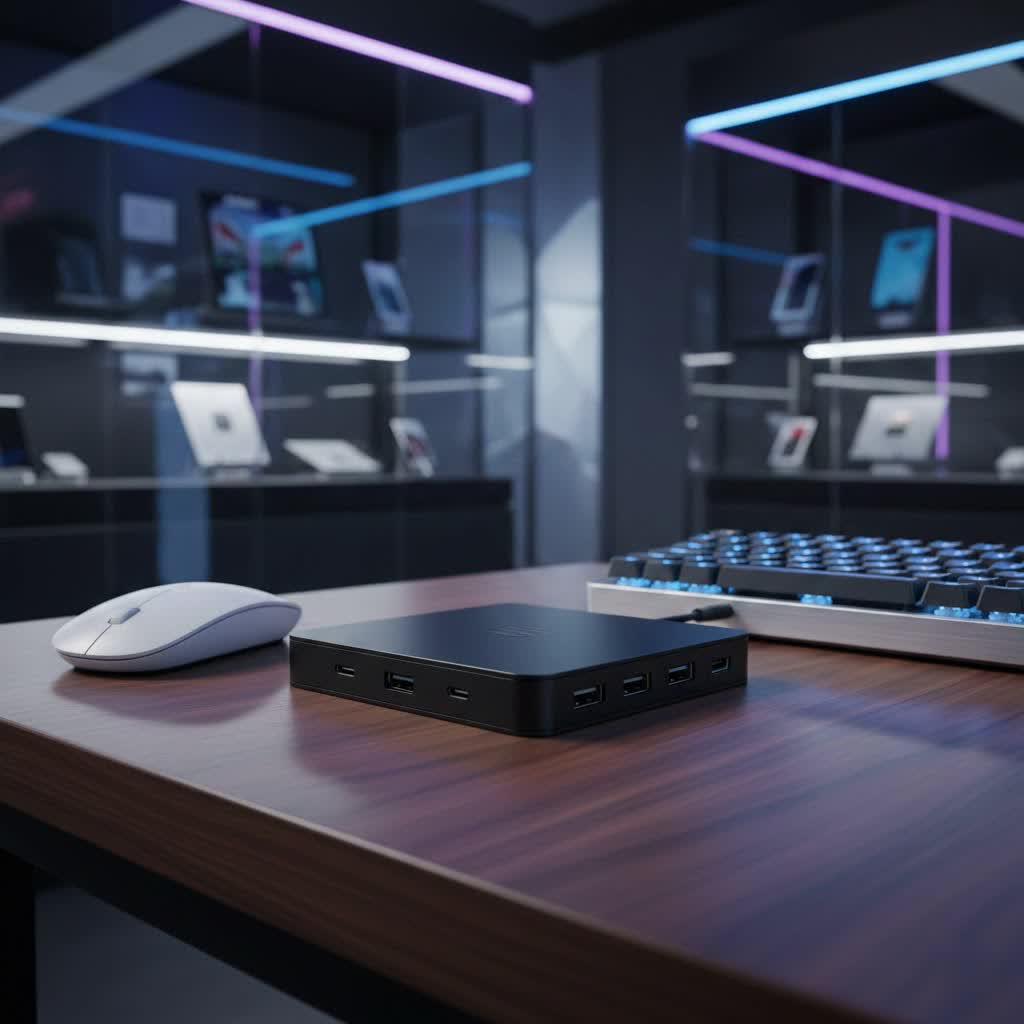
This guide will demystify USB-C hubs with HDMI, exploring their functionality, the various types available, and how to choose the perfect one to meet your unique needs. Let’s dive into the world of expanded connectivity!
Overview of USB-C Hubs with HDMI
What is a USB-C Hub with HDMI?
|
Our Picks for the Best USB Hub in 2026
As an Amazon Associate I earn from qualifying purchases.
|
||
| Num | Product | Action |
|---|---|---|
| 1 | ONFINIO USB Hub 3.0, 7-Port USB Hub Splitter with Individual On/Off Switches and Lights, 3.2ft/1m Long Cable Compatible with MacBook, Laptop, Surface Pro, PS4, PC, Flash Drive, Mobile HDD |

|
| 2 | Powered USB Hub, Wenter 11-Port USB Splitter Hub (10 Faster Data Transfer Ports+ 1 Smart Charging Port) with Individual LED On/Off Switches, USB Hub 3.0 Powered with Power Adapter for Mac, PC |
|
| 3 | PWAY USB 2.0 Switch, USB Switcher Selector 2 Computers Sharing 4 USB2.0 Ports, KVM Switch Devices Peripheral Hub for Keyboard Mouse Printer Scanner Compatible with Windows Mac Linux |
|
| 4 | Anker USB Hub 4 Ports, Multiple USB 3.0 Hub, USB Splitter for Laptop, Extender for A Port Laptop, PC, Desktop and More [Charging Not Supported](2ft USB-A) |
|
| 5 | Acer USB Hub 4 Ports, Multiple USB 3.0 Hub, USBA Splitter for Laptop with Type C Power Port, Extender for A Port Laptop, PC, Desktop and More (2ft) |
|
| 6 | Anker 555 USB-C Hub (8-in-1), with 85W Power Delivery, 4K 60Hz HDMI Port, 10Gbps USB C and 2 A Data Ports, Ethernet microSD SD Card Reader, for MacBook Pro More |
|
| 7 | USB-C Hub 7-in-1 Multiport Adapter – 4K@30Hz HDMI, USB 3.0, USB 2.0, 100W PD Charging, SD/TF Card Reader – USB-C Docking Station for MacBook Pro/Air, Chromebook, Dell, HP & Type-C Devices |
|
| 8 | 13 in 1 USB C Docking Station - Dual Monitor, Triple Display, 8 USB C/A Ports, Ethernet, Audio - LIONWEI USB C Hub for MacBook,Dell,HP,Lenovo,Surface |
|
| 9 | UGREEN USB 3.0 Hub, 4 Ports USB A Splitter Ultra-Slim USB Expander for Mouse, Keyboard, Flash Drive, U Disk, Printer Compatible with Laptop, Desktop PC, Xbox, PS5, and More |
|
| 10 | Acer USB C Hub, 7 in 1 Multi-Port Adapter for Laptop, 4K, HDMI Splitter with 2 USB A 3.1 & Type-C to HDMI Data Port, PD 100W Charging, SD Card Reader for Computer, Desktop, Space Grey |
|
At its core, a USB-C hub with HDMI is a multi-functional adapter that expands the connectivity options of devices equipped with a USB-C port. Imagine it as a central docking point: you plug one cable into your laptop, and suddenly you have multiple USB ports, an HDMI output, and potentially other essential connections at your fingertips. These hubs typically leverage the advanced capabilities of the USB-C standard, which can carry not only data but also video and power through a single port, often referred to as DisplayPort Alt Mode or Thunderbolt.
Why Use a USB-C Hub with HDMI?
The primary reason for using a USB-C hub with HDMI is to overcome the inherent limitations of modern, thin devices. Laptops, particularly ultrabooks and MacBooks, often prioritize a minimalist design, resulting in fewer built-in ports. This creates a need for external expansion.
- Solving Limited Port Problems: These hubs provide multiple USB ports, allowing you to connect a keyboard, mouse, external hard drive, USB flash drives, and other peripherals simultaneously without constantly swapping cables.
- Enhancing Display Capabilities: The integrated HDMI port is a game-changer. It enables you to connect your device to an external monitor, TV, or projector, either mirroring your screen for presentations or extending your workspace for improved multitasking. Many hubs support 4K resolution, offering crisp, high-definition visuals.
- Boosting Productivity and Convenience: With expanded connectivity and multiple displays, you can streamline your workflow, edit content more efficiently, and enjoy a larger, more organized digital workspace. They consolidate numerous individual adapters into one compact device, reducing clutter and simplifying your setup.
Types of USB-C Hubs with HDMI
USB-C hubs with HDMI come in various configurations, defined by their connection standards, power sources, and the number and types of ports they offer.
USB Hubs by Connection Standards
The performance of your hub largely depends on the USB and HDMI standards it supports.
- USB Standards (Input/Output):
- USB-C: This is the most common input port for modern multi-port hubs, known for its reversible connector and versatility. The capabilities of a USB-C port can vary significantly depending on the underlying protocol (USB 3.0, 3.1, 3.2, USB4, or Thunderbolt).
- USB 2.0: Offers basic data transfer speeds (up to 480 Mbps). While older, it’s still found on some budget hubs for low-bandwidth devices.
- USB 3.0 (USB 3.1 Gen 1): Provides significantly faster data transfer speeds (up to 5 Gbps). Most modern peripherals are compatible with this standard.
- USB 3.1 Gen 2: Doubles the speed of USB 3.0, offering up to 10 Gbps data transfer.
- USB 3.2: A newer standard with various generations, some offering up to 20 Gbps.
- USB 4 / Thunderbolt (3 or 4): These represent the pinnacle of USB-C connectivity, offering blazing-fast data transfer (up to 40 Gbps for Thunderbolt 4), support for multiple high-resolution displays, and robust power delivery. They are ideal for power users and professional setups.
- HDMI Standards (Output):
- HDMI 1.4: Supports 4K resolution, but typically limited to a 30Hz refresh rate. Acceptable for static content or casual viewing.
- HDMI 2.0: A significant upgrade, supporting 4K resolution at a smoother 60Hz refresh rate. This is crucial for a fluid user experience, reducing lag for mouse movements and video playback.
- HDMI 2.1: The latest standard, capable of 4K at 120Hz or even 8K, ideal for high-end gaming and professional video editing. Hubs with this standard are becoming more common.
USB Hubs by Power Source
How a hub receives and distributes power is critical, especially for power-hungry devices.
- Bus-Powered (Unpowered): These hubs draw all their power directly from the host device’s USB port. They are typically smaller and more portable. They are suitable for low-power devices like mice, keyboards, and USB flash drives, but may struggle with external hard drives or charging smartphones efficiently. If you connect too many power-hungry devices, it can drain your laptop’s battery or lead to unstable performance.
- Self-Powered (Powered): These hubs come with their own external AC adapter, which plugs into a wall outlet. This provides a dedicated and stable power supply to all connected devices and can also offer pass-through charging for your host laptop (Power Delivery – PD). They are recommended for setups with multiple peripherals, external hard drives, or when charging other devices through the hub.
USB Hubs by Number and Type of Ports
Hubs are often categorized by the total number of integrated ports they offer.
- Common Configurations: You’ll find everything from compact “3-in-1” adapters with just a few basic ports to expansive “12-in-1” docking solutions.
- Other Integrated Ports: Beyond USB data ports and HDMI, many hubs include:
- Ethernet Port (RJ45): For a stable, wired internet connection, often crucial where Wi-Fi is unreliable or for professional use.
- SD/MicroSD Card Readers: Essential for photographers, videographers, and anyone needing to transfer files from cameras or other devices.
- Audio Jacks (3.5mm): For connecting headphones, speakers, or microphones.
- Additional USB-C Ports: Some hubs include a USB-C port for data transfer, while others are solely for Power Delivery.
Comparison Table: Key Features of HDMI USB Hubs
Understanding the differences between various USB generations and HDMI standards is crucial for choosing the right hub.
| Feature | USB 2.0 Hub (with HDMI) | USB 3.0 Hub (with HDMI) | USB 3.1 Gen 2 Hub (with HDMI) | USB 4 / Thunderbolt Hub (with HDMI) |
|---|---|---|---|---|
| Max Data Speed | 480 Mbps | 5 Gbps | 10 Gbps | 20-40 Gbps |
| Max HDMI Resolution | Up to 1080p@60Hz | 4K@30Hz (typically) | 4K@60Hz | Dual 4K@60Hz or Single 4K@120Hz/8K |
| Power Delivery (PD) | Limited/None | Up to 60W (often) | Up to 100W | Up to 100W+ (host charging) |
| External Power Needed? | Rarely for basic use | Often for power-hungry devices | Recommended for multiple peripherals | Recommended for optimal performance |
| Typical Ports | 3-4 USB-A, 1 HDMI | 3-5 USB-A, 1 USB-C PD, 1 HDMI, SD | 2-3 USB-A, 1-2 USB-C, 1 HDMI, Ethernet, SD/MicroSD, Audio | 3-4 USB-A, 2 USB-C (data/PD), 1-2 HDMI/DP, Ethernet, SD/MicroSD, Audio |
| Common Use Case | Basic peripheral connection, older monitors | General office work, single 4K display, moderate data transfer | Professional use, dual 4K displays, faster data transfer | High-end workstations, multiple high-res displays, extreme data speeds, gaming |
| Compatibility (Host) | USB-A/USB-C | USB-A/USB-C 3.0+ | USB-C 3.1 Gen 2+ | USB-C with Thunderbolt 3/4 or USB4 |
How to Choose the Right USB-C Hub with HDMI (Buying Guide)
Selecting the ideal USB-C hub with HDMI requires a clear understanding of your specific needs and your existing equipment.
1. Identify Your Core Needs
Start by assessing what you need the hub to do:
- What devices will you connect? (e.g., mouse, keyboard, external SSD, printer, webcam, microphone).
- What display resolution and refresh rate do you require? For smooth scrolling and responsive visuals, aim for 4K@60Hz. Gamers or video editors might need 4K@120Hz or higher.
- Do you need to charge your laptop through the hub? If so, a hub with Power Delivery (PD) is essential, with a wattage that matches or exceeds your laptop’s charger.
- Will you use it on the go or primarily at a desk? Portability influences size and cable length.
2. Matching Host Device Compatibility
Not all USB-C ports are created equal. Your laptop’s USB-C port must support the necessary capabilities for the hub to function fully.
- DisplayPort Alt Mode: For video output via HDMI, your USB-C port must support DisplayPort Alternate Mode (DP Alt Mode).
- Thunderbolt: If your laptop has Thunderbolt 3 or 4 ports, a Thunderbolt-compatible hub can offer superior performance, especially for multiple high-resolution displays and ultra-fast data transfer.
3. Selecting the Right Connectivity Standards
Choose a hub that aligns with your performance expectations:
- USB Speed: For transferring large files to external drives, opt for USB 3.0 (5Gbps) or higher. For even faster speeds, look for USB 3.1 Gen 2 (10Gbps) or Thunderbolt/USB4 (20-40Gbps).
- HDMI Version: As discussed, HDMI 2.0 (4K@60Hz) is the sweet spot for most users, offering a significant upgrade over HDMI 1.4 (4K@30Hz).
4. Power Requirements
Consider whether you need a bus-powered or self-powered hub.
- Bus-Powered: Suitable if you only connect low-power devices.
- Self-Powered (with Power Delivery): Essential for connecting multiple devices, external hard drives, or charging your laptop while using the hub. Check the maximum PD wattage supported by the hub (e.g., 100W).
5. Port Configuration
List out all the specific ports you need in addition to HDMI and standard USB-A ports.
- Do you need an Ethernet port for a stable wired network connection?
- Are SD and microSD card slots critical for your workflow?
- Do you require additional USB-C ports for other peripherals or data transfer, not just power?
6. Brand Reputation and Build Quality
Investing in a hub from a reputable brand often means better build quality, heat management, and reliable performance. Read user reviews to gauge durability and common issues like overheating. Quality materials contribute to longevity and better performance.
7. Budget Considerations
USB-C hubs with HDMI vary widely in price. Determine your budget, but balance it with your needs. Sometimes, spending a bit more on a hub with better standards (like HDMI 2.0 or higher USB speeds) can significantly improve your experience and future-proof your setup.
Conclusion
USB-C hubs with HDMI are indispensable tools in today’s digital landscape, offering a powerful solution to the common problem of limited connectivity on modern devices. They seamlessly expand your laptop’s capabilities, allowing you to connect external monitors for enhanced productivity, plug in essential peripherals, and manage data with greater ease. From boosting your multitasking ability with multiple 4K displays to ensuring your devices stay charged with Power Delivery, the right hub can transform your digital workspace.
By carefully considering your specific needs—such as the required HDMI resolution, data transfer speeds, power demands, and desired port types—you can select a hub that not only meets your current requirements but also adapts to your future technological advancements. Don’t let limited ports hold you back; unlock the full potential of your devices with a versatile USB-C hub with HDMI.
Are you ready to streamline your setup and experience unparalleled connectivity?
Frequently Asked Questions
Do all USB-C ports support HDMI output?
No, not all USB-C ports support HDMI output directly. For video output, the USB-C port on your host device must support “DisplayPort Alternate Mode” (DP Alt Mode) or be a Thunderbolt 3 or 4 port. If your USB-C port only supports data transfer and power, an HDMI hub connected to it will not be able to output video.
Why is my HDMI display laggy through the hub?
A laggy HDMI display can be caused by several factors, often related to the hub’s capabilities. Ensure your hub and display support a refresh rate of at least 60Hz at your desired resolution (e.g., 4K@60Hz). Older HDMI standards (like HDMI 1.4) often limit 4K resolution to 30Hz, which can feel sluggish. Also, ensure your laptop’s USB-C port and the hub itself have sufficient bandwidth and are not overloaded with too many high-bandwidth devices.
Can I use a USB 3.0 hub with a USB 2.0 device?
Yes, USB 3.0 hubs are generally backward compatible with USB 2.0 devices. You can connect a USB 2.0 peripheral to a USB 3.0 port on the hub. However, the data transfer speeds for that particular device will be limited to USB 2.0 speeds (480 Mbps), not the faster USB 3.0 speeds.
What is Power Delivery (PD) in a USB-C hub?
Power Delivery (PD) is a specification that allows for faster and more flexible power transfer over USB-C connections. In a USB-C hub, PD enables the hub to not only power connected peripherals but also pass through power from an external adapter to charge your host laptop, often up to 100W or more. This means you can charge your laptop and use multiple devices through the hub with a single cable connection.
