In an era where laptops are becoming increasingly thin, the luxury of ample ports often seems like a distant memory. The frustration of trying to connect a mouse, keyboard, external drive, and monitor to a device with only one or two USB-C ports is a common modern dilemma. This is where an Anker USB hub becomes an indispensable tool, transforming a single port into a versatile command center for all your peripherals. Whether you’re a professional juggling multiple devices, a student on the go, or a tech enthusiast seeking seamless connectivity, Anker USB hubs offer reliable and efficient solutions to overcome your port limitations and supercharge your workflow.
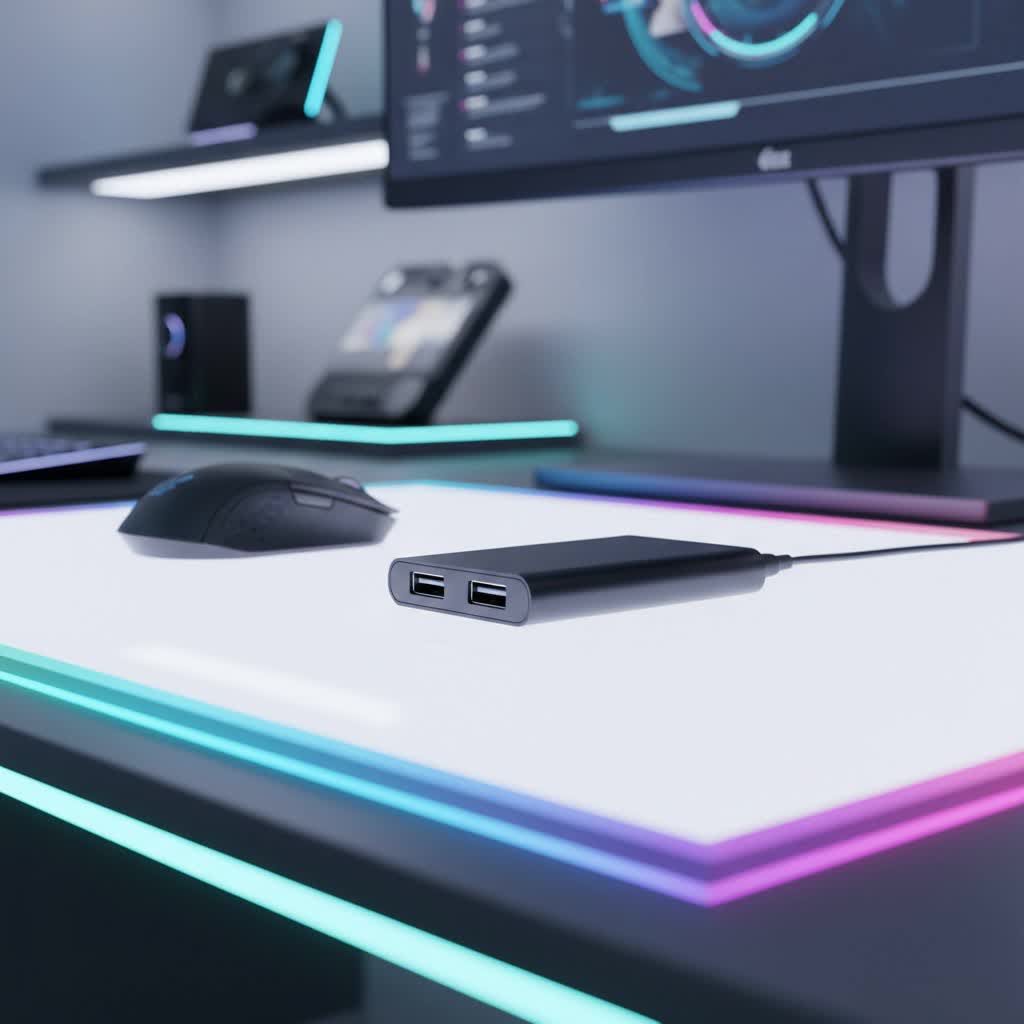
Overview of USB Hub Technology
What is a USB Hub?
|
Our Picks for the Best USB Hub in 2026
As an Amazon Associate I earn from qualifying purchases.
|
||
| Num | Product | Action |
|---|---|---|
| 1 | USB-C Hub 7-in-1 Multiport Adapter – 4K@30Hz HDMI, USB 3.0, USB 2.0, 100W PD Charging, SD/TF Card Reader – USB-C Docking Station for MacBook Pro/Air, Chromebook, Dell, HP & Type-C Devices |

|
| 2 | Powered USB Hub, Wenter 11-Port USB Splitter Hub (10 Faster Data Transfer Ports+ 1 Smart Charging Port) with Individual LED On/Off Switches, USB Hub 3.0 Powered with Power Adapter for Mac, PC |
|
| 3 | Acer USB Hub 4 Ports, Multiple USB 3.0 Hub, USBA Splitter for Laptop with Type C Power Port, Extender for A Port Laptop, PC, Desktop and More (2ft) |
|
| 4 | Anker USB Hub 4 Ports, Multiple USB 3.0 Hub, USB Splitter for Laptop, Extender for A Port Laptop, PC, Desktop and More [Charging Not Supported](2ft USB-A) |
|
| 5 | UGREEN USB 3.0 Hub, 4 Ports USB A Splitter Ultra-Slim USB Expander for Mouse, Keyboard, Flash Drive, U Disk, Printer Compatible with Laptop, Desktop PC, Xbox, PS5, and More |
|
| 6 | ONFINIO USB Hub 3.0, 7-Port USB Hub Splitter with Individual On/Off Switches and Lights, 3.2ft/1m Long Cable Compatible with MacBook, Laptop, Surface Pro, PS4, PC, Flash Drive, Mobile HDD |
|
| 7 | Anker 555 USB-C Hub (8-in-1), with 85W Power Delivery, 4K 60Hz HDMI Port, 10Gbps USB C and 2 A Data Ports, Ethernet microSD SD Card Reader, for MacBook Pro More |
|
| 8 | Acer USB C Hub, 7 in 1 Multi-Port Adapter for Laptop, 4K, HDMI Splitter with 2 USB A 3.1 & Type-C to HDMI Data Port, PD 100W Charging, SD Card Reader for Computer, Desktop, Space Grey |
|
| 9 | 13 in 1 USB C Docking Station - Dual Monitor, Triple Display, 8 USB C/A Ports, Ethernet, Audio - LIONWEI USB C Hub for MacBook,Dell,HP,Lenovo,Surface |
|
| 10 | PWAY USB 2.0 Switch, USB Switcher Selector 2 Computers Sharing 4 USB2.0 Ports, KVM Switch Devices Peripheral Hub for Keyboard Mouse Printer Scanner Compatible with Windows Mac Linux |
|
A USB hub is a device that expands a single Universal Serial Bus (USB) port into multiple ports, allowing you to connect several peripheral devices to your computer simultaneously. Essentially, it acts as a splitter, managing data and power distribution from one host port to many connected devices. The concept of USB hubs emerged from the widespread adoption of USB, providing a standardized and convenient way to connect a vast array of peripherals, from keyboards and mice to external hard drives and printers. Early hubs were simple, offering basic data transfer, but modern hubs have evolved to incorporate various port types and advanced functionalities.
Why You Need an Anker USB Hub?
The primary reason for needing a USB hub is to solve the pervasive problem of insufficient ports on modern computers, especially ultrabooks and tablets. Anker, a renowned brand in charging and connectivity solutions, provides USB hubs that stand out for their quality, durability, and diverse functionalities. An Anker USB hub not only expands your device’s connectivity options but also enhances convenience and work efficiency. With a reliable Anker hub, you can easily connect an external monitor, a stable wired network, multiple USB-A accessories, and even charge your laptop through a single port, transforming your workspace into a productive environment.
Anker USB Hub Types
Anker offers a comprehensive range of USB hubs, categorized by their connection standards, power sources, and the number and types of ports they provide. Understanding these distinctions is crucial for selecting the right hub for your specific needs.
Anker USB Hubs by Connection Standard
The connection standard dictates the speed and capabilities of your hub. Anker offers hubs supporting various USB generations to match diverse user requirements.
- USB 2.0: While slower (up to 480 Mbps), Anker’s USB 2.0 hubs are ideal for basic peripherals like mice, keyboards, and printers that don’t require high data transfer speeds. They are a cost-effective solution for simple expansion.
- USB 3.0 (USB 3.1 Gen 1): Offering speeds up to 5 Gbps, Anker USB 3.0 hubs are a popular choice for connecting external hard drives, flash drives, and other peripherals where faster data transfer is beneficial. The Anker 4-Port USB 3.0 Ultra Slim Data Hub is a prime example, providing efficient expansion for everyday use.
- USB 3.1 Gen 2: With a maximum speed of 10 Gbps, Anker hubs supporting this standard are designed for users who frequently transfer large files from high-speed external SSDs or use devices requiring greater bandwidth. These are often found in more advanced USB-C hubs.
- USB 3.2: This standard encompasses several generations, including USB 3.2 Gen 1 (5 Gbps), Gen 2 (10 Gbps), and Gen 2×2 (20 Gbps). Anker’s higher-end USB-C hubs often leverage these speeds for optimal performance with modern peripherals.
- USB 4: Representing the latest in USB technology, Anker hubs with USB 4 compatibility offer speeds up to 40 Gbps and can support a wider range of functionalities, including advanced display output and power delivery, often overlapping with Thunderbolt capabilities.
- Thunderbolt: While USB-C is the connector shape, Thunderbolt is a powerful underlying technology that uses the USB-C port. Anker provides docking stations and hubs compatible with Thunderbolt 3 and 4, delivering exceptional speeds (up to 40 Gbps), dual monitor support, and robust power delivery for professionals and creatives.
Anker USB Hubs by Power Source
The power source of a USB hub determines its ability to support power-hungry devices. Anker offers both bus-powered and self-powered options.
- Bus-Powered USB Hubs: These Anker hubs draw all their power directly from the connected computer’s USB port. They are typically compact, lightweight, and highly portable, making them excellent for travel. However, they are best suited for low-power devices like mice, keyboards, and flash drives. Connecting multiple high-power devices to a bus-powered hub can lead to instability or insufficient power delivery. The Anker 4-Port USB 3.0 Ultra Slim Data Hub is a great example of a bus-powered solution.
- Self-Powered (Powered) USB Hubs: Anker’s self-powered hubs come with an external power adapter. This dedicated power source ensures stable and sufficient power for all connected devices, including power-hungry peripherals like external hard drives, optical drives, or charging multiple smartphones. They are ideal for desktop setups where maximum connectivity and reliability are paramount, such as the Anker 10-Port 60W Data Hub. Many Anker USB-C hubs also feature “Power Delivery (PD)” pass-through, allowing them to draw power from an external charger and deliver it to both the host laptop and connected devices.
Anker USB Hubs by Port Quantity and Type
Anker caters to various connectivity needs by offering hubs with different numbers and combinations of ports.
- Basic Expansion (e.g., 4-port hubs): These hubs provide straightforward USB-A expansion, perfect for users needing to connect a few extra peripherals like a mouse, keyboard, and a USB stick. The Anker 4-Port USB 3.0 Hub is a popular choice for its simplicity and portability.
- Moderate Expansion (e.g., 7-port hubs): For users with a growing number of devices, Anker offers hubs with 7 or more ports, often including a mix of USB-A for data and dedicated charging ports.
- Comprehensive Connectivity (e.g., Multi-functional USB-C Hubs): These are the most versatile Anker hubs, transforming a single USB-C port into a complete workstation. They typically feature a combination of:
- USB-A ports: For legacy devices.
- USB-C data ports: For connecting modern USB-C peripherals.
- HDMI or DisplayPort: For external monitors, supporting resolutions up to 4K at 30Hz or 60Hz.
- Ethernet port: For a stable, wired internet connection, crucial where Wi-Fi is unreliable.
- SD and microSD card readers: Essential for photographers and videographers.
- USB-C Power Delivery (PD) input: To charge your laptop while using the hub. Examples include the Anker 533, 543, 547, 555, and 655 USB-C Hubs, each offering a slightly different array of ports tailored to specific user needs.
Key Features of Anker USB Hubs to Consider
Choosing the right Anker USB hub involves assessing several key features that directly impact its functionality and suitability for your setup.
Determine Your Usage Needs
Before diving into specifications, consider what devices you need to connect. Do you primarily need extra USB-A ports for a mouse and keyboard, or do you require advanced connectivity like an external 4K monitor, a stable Ethernet connection, and fast SD card access for photography? Your daily setup dictates the essential ports and features. If you frequently transfer large files, prioritize high data transfer speeds. If you travel often, a compact and bus-powered hub might be preferable.
Choose the Right Connection Standard
Align the hub’s connection standard with your computer’s capabilities and your peripheral needs. If your laptop has USB-C ports, an Anker USB-C hub is likely the most future-proof choice, offering access to higher speeds and power delivery. Ensure the hub’s standard (e.g., USB 3.0, USB 3.2, USB 4) is compatible with your devices for optimal performance. Remember, a USB-C port might not always support video output (DisplayPort Alt Mode) or Power Delivery; check your device’s specifications to confirm.
Select the Appropriate Number and Types of Ports
Estimate the number of devices you intend to connect simultaneously. It’s often wise to choose an Anker hub with a few extra ports than you currently need, providing room for future expansion. Beyond the quantity, scrutinize the types of ports. If you connect an external display, an HDMI or DisplayPort is crucial. Photographers will benefit from integrated SD and microSD card readers. For stable internet, an Ethernet port is a must-have.
Bus-Powered vs. Self-Powered (with Power Delivery)
For simple setups with low-power peripherals, an Anker bus-powered hub offers portability and convenience. However, if you plan to connect power-hungry devices like external hard drives, or if you want to charge your laptop through the hub, an Anker self-powered hub or a USB-C hub with Power Delivery (PD) pass-through is essential. Anker’s PD-enabled hubs can accept a high wattage input (e.g., 100W) and deliver a significant portion of that power (e.g., 85-96W) to your laptop while operating other connected devices.
Data Transfer Speed
Anker hubs specify their data transfer speeds. For basic file transfers, 5 Gbps (USB 3.0/3.1 Gen 1) is generally sufficient. However, for professionals working with large media files or requiring rapid data exchange with external SSDs, look for Anker hubs offering 10 Gbps (USB 3.1 Gen 2 / USB 3.2 Gen 2) or even 20-40 Gbps (USB 3.2 Gen 2×2 / USB 4 / Thunderbolt) for bottleneck-free performance.
Video Output Capabilities
If you need to connect an external monitor, check the hub’s video output specifications. Anker USB-C hubs typically offer HDMI ports. Pay attention to the supported resolution and refresh rate (e.g., 4K@30Hz vs. 4K@60Hz). For crisp, fluid visuals, especially for creative work or gaming, 4K@60Hz support is highly desirable.
Portability and Build Quality
Anker is known for its durable and well-designed products. If you travel frequently, look for slim, lightweight, and robust Anker hubs that can withstand daily wear and tear. For desktop use, a hub with a longer cable and a stable footprint might be preferred. Investing in a hub with good build quality ensures longevity and reliable performance.
Anker’s Reputation and Pricing
Anker is a trusted brand in the accessory market, consistently receiving positive reviews for its products. While Anker hubs might sometimes have a slightly higher price point than generic alternatives, their reliability, performance, and customer support often justify the investment. Comparing prices across different Anker models and reading user reviews can help you find the best value.
Anker’s Top USB Hub Picks
Anker offers a diverse portfolio of hubs, each designed to meet specific user needs. Here are some notable examples:
- Anker 533 USB C Hub (5-in-1, Slim): This compact and sleek hub is perfect for everyday use and travel, offering essential expansion with HDMI (4K@30Hz), Ethernet, and three USB 3.0 ports. It prioritizes portability and functionality for users who need core connectivity without bulk.
- Anker 543 USB C Hub (6-in-1, Slim): Building on the 533, the 543 offers a more comprehensive set of features, including HDMI (4K@30Hz), Ethernet, a USB-C PD input (up to 53W pass-through), a USB-C data port, and two USB-A 3.0 ports. It’s a versatile choice for users requiring more connectivity options while maintaining a slim profile.
- Anker 555 USB-C Hub (8-in-1): A powerful hub designed for faster workflows, it features 10 Gbps USB-C data and two USB-A 10 Gbps ports, 4K@60Hz HDMI output, full-sized SD/microSD card readers, and a Gigabit Ethernet jack, alongside a 100W Power Delivery input. It’s ideal for those with high-speed peripherals and higher resolution monitors.
- Anker 655 USB-C Hub (8-in-1): A robust and feature-rich hub, especially popular with MacBook users. It provides 4K@60Hz HDMI, Ethernet, USB-C PD, multiple USB-A ports, and SD/microSD card readers, making it an excellent all-in-one solution for professionals and creatives.
- Anker 4-Port USB 3.0 Ultra Slim Data Hub: For those needing straightforward USB-A expansion, this bus-powered hub is incredibly portable, affordable, and provides four USB 3.0 ports for fast data transfer with basic peripherals.
- Anker 10-Port 60W Data Hub with 7 USB 3.0 Ports and 3 Charging Ports: This self-powered hub is built for extensive desktop setups, offering a large number of USB 3.0 data ports and dedicated charging ports, ensuring you never run out of connectivity options for numerous peripherals.
These examples highlight Anker’s commitment to providing targeted solutions, from minimalist travel hubs to comprehensive desktop docking stations.
“Anker has consistently delivered reliable and high-performance USB hubs, making them a go-to brand for users looking to streamline their digital workspaces without compromising on speed or power.”
Conclusion
Anker USB hubs are more than just simple expanders; they are essential tools for maximizing the potential of your devices in an increasingly port-limited world. By offering a diverse range of options, from compact travel hubs to powerful docking stations, Anker ensures that there’s a solution for every user, whether you need basic USB-A expansion or a full suite of ports including HDMI, Ethernet, and high-speed data transfer. Carefully considering your specific needs—such as connection standards, power requirements, and port types—will enable you to select an Anker hub that seamlessly integrates into your workflow, enhancing both convenience and productivity. Embrace the power of expanded connectivity and unlock a more efficient digital experience. What kind of Anker USB hub will transform your setup today?
Frequently Asked Questions
What is the difference between a bus-powered and self-powered Anker USB hub?
An Anker bus-powered hub draws power directly from your computer, making it portable but better for low-power devices. A self-powered (or externally powered) Anker hub uses an AC adapter, providing stable power for multiple high-consumption devices like external hard drives.
Can an Anker USB-C hub charge my laptop?
Yes, many Anker USB-C hubs feature Power Delivery (PD) pass-through. This means you can connect your laptop’s original power adapter to the hub’s USB-C PD input port, and the hub will then pass a significant portion of that power (e.g., 85-96W from a 100W input) to your laptop while powering other connected devices.
What does “Power Delivery” mean on an Anker USB hub?
Power Delivery (PD) on an Anker USB hub indicates its ability to handle and supply higher power levels. For USB-C hubs, it specifically refers to the hub’s capability to receive power from an external charger and deliver it to both the host device (like a laptop) and other connected peripherals, ensuring everything stays charged and operational.
Which Anker USB hub is best for my MacBook?
For MacBooks, Anker’s multi-functional USB-C hubs are often recommended, such as the Anker 655 or 555 USB-C Hub. These hubs typically offer a comprehensive array of ports including HDMI (often 4K@60Hz), Ethernet, multiple USB-A and USB-C data ports, and SD card readers, along with robust Power Delivery for charging.
How fast are Anker USB 3.0 hubs?
Anker USB 3.0 hubs support data transfer speeds of up to 5 Gigabits per second (Gbps). This is significantly faster than USB 2.0’s 480 Megabits per second (Mbps) and is suitable for most external hard drives, flash drives, and other peripherals, allowing for quick file transfers and smooth operation.
Can I use an Anker USB-C hub with a non-USB-C laptop?
Generally, no. Anker USB-C hubs are designed to connect to a USB-C port on your host device. While adapters exist to convert USB-A to USB-C, they typically don’t support the advanced features of a USB-C hub like video output (DisplayPort Alt Mode) or Power Delivery, limiting functionality significantly.
