Are you constantly battling with a shortage of USB ports on your computer? Do you find yourself repeatedly plugging and unplugging devices, or wishing you could simply turn off a glowing peripheral without disconnecting it entirely? A USB hub with individual switches offers an elegant solution, transforming your chaotic desk into an organized, efficient workspace. This comprehensive guide will explore everything you need to know about these versatile devices, helping you choose the perfect hub to streamline your digital life.
Understanding USB Hubs with Switches
What is a USB Hub with Individual Switches?
|
Our Picks for the Best USB Hub in 2026
As an Amazon Associate I earn from qualifying purchases.
|
||
| Num | Product | Action |
|---|---|---|
| 1 | PWAY USB 2.0 Switch, USB Switcher Selector 2 Computers Sharing 4 USB2.0 Ports, KVM Switch Devices Peripheral Hub for Keyboard Mouse Printer Scanner Compatible with Windows Mac Linux |

|
| 2 | UGREEN USB 3.0 Hub, 4 Ports USB A Splitter Ultra-Slim USB Expander for Mouse, Keyboard, Flash Drive, U Disk, Printer Compatible with Laptop, Desktop PC, Xbox, PS5, and More |
|
| 3 | Anker 555 USB-C Hub (8-in-1), with 85W Power Delivery, 4K 60Hz HDMI Port, 10Gbps USB C and 2 A Data Ports, Ethernet microSD SD Card Reader, for MacBook Pro More |
|
| 4 | Powered USB Hub, Wenter 11-Port USB Splitter Hub (10 Faster Data Transfer Ports+ 1 Smart Charging Port) with Individual LED On/Off Switches, USB Hub 3.0 Powered with Power Adapter for Mac, PC |
|
| 5 | Acer USB Hub 4 Ports, Multiple USB 3.0 Hub, USBA Splitter for Laptop with Type C Power Port, Extender for A Port Laptop, PC, Desktop and More (2ft) |
|
| 6 | USB-C Hub 7-in-1 Multiport Adapter – 4K@30Hz HDMI, USB 3.0, USB 2.0, 100W PD Charging, SD/TF Card Reader – USB-C Docking Station for MacBook Pro/Air, Chromebook, Dell, HP & Type-C Devices |
|
| 7 | Anker USB Hub 4 Ports, Multiple USB 3.0 Hub, USB Splitter for Laptop, Extender for A Port Laptop, PC, Desktop and More [Charging Not Supported](2ft USB-A) |
|
| 8 | Acer USB C Hub, 7 in 1 Multi-Port Adapter for Laptop, 4K, HDMI Splitter with 2 USB A 3.1 & Type-C to HDMI Data Port, PD 100W Charging, SD Card Reader for Computer, Desktop, Space Grey |
|
| 9 | 13 in 1 USB C Docking Station - Dual Monitor, Triple Display, 8 USB C/A Ports, Ethernet, Audio - LIONWEI USB C Hub for MacBook,Dell,HP,Lenovo,Surface |
|
| 10 | ONFINIO USB Hub 3.0, 7-Port USB Hub Splitter with Individual On/Off Switches and Lights, 3.2ft/1m Long Cable Compatible with MacBook, Laptop, Surface Pro, PS4, PC, Flash Drive, Mobile HDD |
|
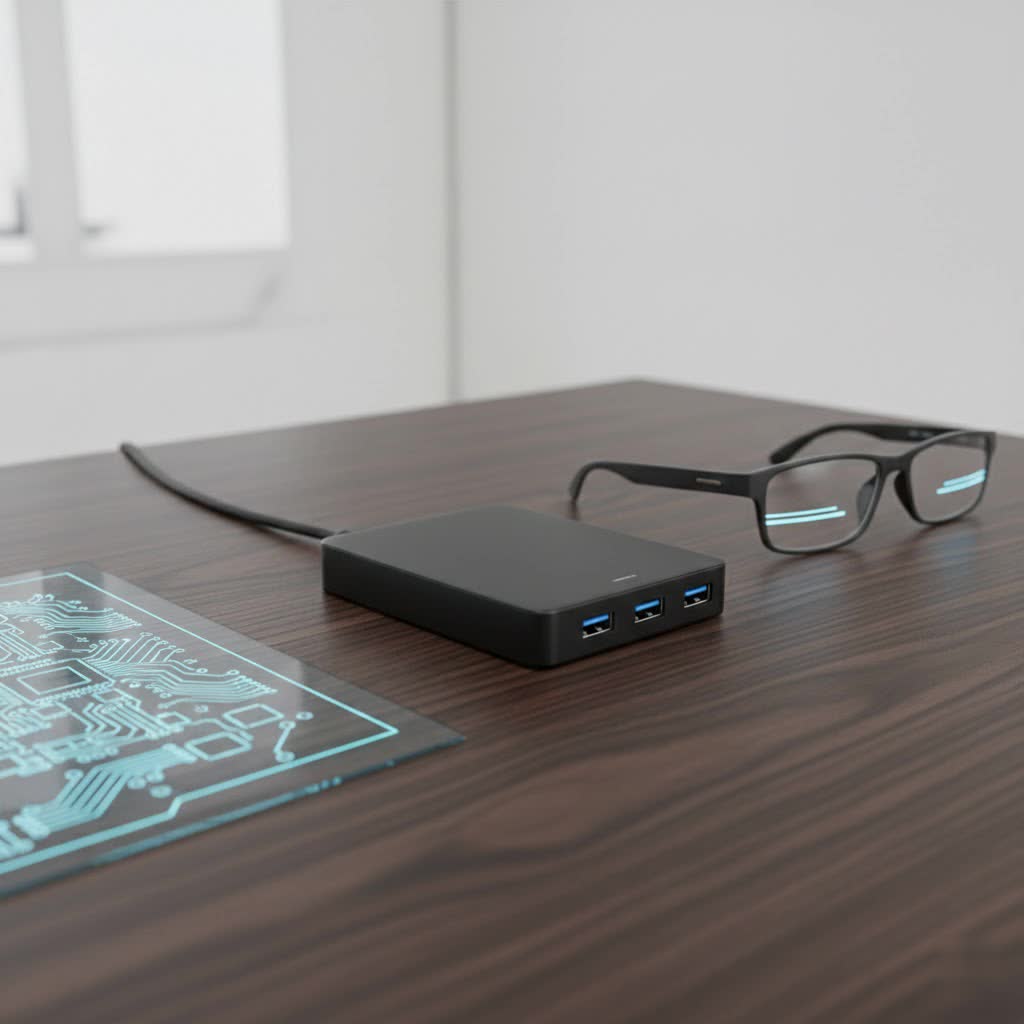
At its core, a USB hub is a device that expands a single USB port on your computer into multiple ports, allowing you to connect more peripherals simultaneously. A USB hub with individual switches takes this functionality a step further by integrating on/off buttons for each USB port. This unique feature enables you to control the power and connectivity of individual devices without having to physically remove their cables. Think of it as a power strip for your USB devices, but with smart control over each connection. These hubs facilitate both data transfer and power delivery to connected gadgets, providing a centralized point for managing your USB ecosystem.
Why You Need a USB Hub with Individual Switches
The benefits of incorporating a switched USB hub into your setup are numerous, extending beyond mere port expansion. Firstly, it provides unparalleled convenience. Instead of fumbling behind your computer to unplug an external hard drive you’re not currently using or a gaming mouse that emits distracting lights, you can simply flick a switch. This is particularly useful for devices that draw constant power or that you only need occasionally. Secondly, it can contribute to energy savings by allowing you to power down idle peripherals, thereby reducing phantom power draw. This not only benefits your electricity bill but also extends the lifespan of your devices by minimizing unnecessary runtime. Furthermore, controlling individual ports can prevent potential data conflicts or power fluctuations when connecting multiple high-demand devices. For instance, you can ensure adequate power supply to a specific device by temporarily disabling others that are not in active use.
Types of USB Hubs with Switches
USB hubs with switches come in various configurations, primarily differentiated by their USB standard and power source. Understanding these distinctions is crucial for selecting a hub that meets your specific technical requirements and usage scenarios.
USB Hubs by Connection Standard
The USB standard dictates the maximum data transfer speed and capabilities of your hub. Choosing the right standard ensures your devices operate at their optimal performance.
- USB 2.0 (480 Mbps): These older hubs offer basic connectivity and are suitable for low-bandwidth devices like keyboards, mice, printers, and older webcams. While slower, they are often more affordable and perfectly adequate for non-data-intensive peripherals.
- USB 3.0 / USB 3.1 Gen 1 (5 Gbps): Significantly faster than USB 2.0, USB 3.0 (now often referred to as USB 3.1 Gen 1 or USB 3.2 Gen 1) hubs are the most common choice. They provide ample speed for external hard drives, high-resolution webcams, flash drives, and other modern peripherals. Many switched hubs, such as those from Sabrent and StarTech.com, utilize this standard, offering a good balance of speed and cost-effectiveness.
- USB 3.1 Gen 2 / USB 3.2 Gen 2 (10 Gbps): For users who demand even higher speeds, these hubs offer double the bandwidth of USB 3.0. They are ideal for transferring large files quickly to and from NVMe enclosures, high-performance external SSDs, or connecting advanced multimedia devices. While less common with individual switches, they represent a solid choice for future-proofing your setup.
- USB 4 / Thunderbolt (20-40 Gbps): Representing the cutting edge of USB technology, USB 4 and Thunderbolt hubs offer the highest data transfer rates, often incorporating features like video output and power delivery. Switched hubs at this speed are still relatively rare, but the technology is evolving. These are best suited for professionals working with massive data sets, multiple high-resolution displays, or demanding docking station functionalities.
USB Hubs by Power Source
The power source of a USB hub determines its ability to support various devices, especially those with higher power demands.
- Bus-Powered USB Hubs: These hubs draw all their power directly from the host computer’s USB port. They are typically compact and portable, making them convenient for on-the-go use with devices like mice, keyboards, and flash drives that consume minimal power. However, they may struggle to power multiple high-draw devices simultaneously, potentially leading to instability or underperformance.
- Self-Powered USB Hubs (with AC Adapter): Equipped with an external power adapter, these hubs provide their own power supply, independent of the host computer. This makes them indispensable for connecting power-hungry devices such as external hard drives, optical drives, printers, or charging multiple smartphones and tablets. Many switched USB hubs, including models from StarTech.com and Sabrent, offer self-powered configurations, ensuring stable and consistent power delivery across all ports. This also often enables fast charging capabilities for your mobile devices.
USB Hubs by Number of Ports
USB hubs are available with a varying number of ports to suit different levels of connectivity needs.
- 4-Port USB Hubs: These are common for basic expansion, ideal for users who need to connect a few extra peripherals like a mouse, keyboard, and a flash drive.
- 7-Port USB Hubs: Offering more versatility, 7-port hubs are suitable for desks with multiple external devices such as a webcam, microphone, external storage, and charging cables. StarTech.com offers 7-port self-powered USB-C hubs with individual switches.
- 10-Port or More USB Hubs: Designed for power users and professional workstations, these hubs cater to extensive setups involving numerous peripherals, external drives, and specialized equipment. Sabrent, for instance, provides 10-port USB 3.0 hubs with power switches.
Comparison Table: USB Hubs with Switches
| Feature | USB 2.0 Hub (with switches) | USB 3.0 / 3.1 Gen 1 Hub (with switches) | USB 3.1 Gen 2 / 3.2 Gen 2 Hub (with switches) |
|---|---|---|---|
| Max Speed | 480 Mbps | 5 Gbps | 10 Gbps |
| Typical Devices | Mouse, keyboard, printer, older cams | External HDDs, flash drives, webcams | High-speed SSDs, advanced multimedia |
| Power Options | Bus-powered or Self-powered | Bus-powered or Self-powered | Mostly Self-powered |
| Port Count | 4, 7, 10+ | 4, 7, 10+ | 4, 7 |
| Cost | Low | Moderate | Higher |
| Key Benefit | Basic control, affordability | Speed, versatility, broad compatibility | Future-proofing, high-performance |
How to Choose the Best USB Hub with Switches (Buying Guide)
Selecting the right USB hub with individual switches requires careful consideration of your current needs and future plans.
1. Assess Your Usage Needs
Start by making a list of all the USB devices you intend to connect. Consider:
- Device Types: Are they low-power (mouse, keyboard) or high-power (external hard drives, chargers, printers)?
- Speed Requirements: Do you transfer large files frequently, or mainly use low-bandwidth peripherals?
- Portability: Do you need a compact, bus-powered hub for travel, or a more robust, self-powered hub for a stationary desk setup?
2. Match the USB Standard
Identify the USB ports available on your host computer (laptop or desktop). Ideally, choose a USB hub with the same or a higher USB standard to ensure optimal performance. For example, if your computer has USB 3.0 ports, a USB 3.0 (or USB 3.2 Gen 1) hub is a great choice, offering backward compatibility with USB 2.0 devices while allowing faster peripherals to operate at their full speed. StarTech.com offers hubs with USB 3.2 Gen 1 (5Gbps) transfer rates.
3. Determine Power Requirements
This is a critical decision.
- If you primarily connect low-power devices, a bus-powered hub might suffice due to its portability and simplicity.
- However, if you plan to connect power-hungry devices or multiple peripherals, a self-powered hub with an AC adapter is essential. This ensures stable power delivery to all connected devices, preventing performance issues or device disconnections. Sabrent offers USB 3.0 hubs with power switches in 36W and 60W configurations.
4. Choose the Right Number of Ports
Consider how many devices you currently need to connect and how many you might add in the future. It’s often wise to choose a hub with a few extra ports than you currently require, providing room for expansion without needing another purchase soon after.
5. Evaluate Brand Reputation and Read Reviews
Invest in products from reputable brands known for quality and reliability. Brands like Sabrent and StarTech.com are well-regarded in the peripheral market. Check user reviews for insights into product performance, durability, and any potential compatibility issues. Reviews can also highlight practical features like the brightness of LED indicators or the quality of the individual switches.
6. Look for Additional Features
Beyond the core functionality, some hubs offer extra features that enhance usability:
- LED Indicators: Clear LED lights for each port show which connections are active.
- Fast Charging Ports: Dedicated ports (often USB-C) that deliver higher power for rapid device charging.
- Mountable Design: Some hubs can be mounted under a desk or on a wall for a cleaner setup.
- Cable Length: Ensure the host cable is long enough to reach your computer comfortably.
Conclusion
A USB hub with individual switches is more than just a simple port expander; it’s a powerful tool for enhancing control, efficiency, and organization in your digital workspace. By allowing you to manage power to each device independently, these hubs offer unparalleled convenience, energy savings, and improved peripheral stability. When making your choice, prioritize the USB standard that matches your needs, ensure adequate power supply (especially for demanding devices), and consider the number of ports and any desirable additional features. With the right USB hub with switches, you can transform your connectivity, bringing order and intelligence to your array of devices. Are you ready to take control of your USB connections?
Frequently Asked Questions
Can a USB hub with switches improve performance?
While a USB hub primarily expands connectivity, a self-powered hub with switches can indirectly improve performance by ensuring each connected device receives stable and sufficient power, preventing power-related slowdowns or disconnections, especially for high-demand peripherals like external hard drives.
Do individual switches on a USB hub save power?
Yes, individual switches allow you to cut power to specific peripherals when they are not in use. This can reduce overall energy consumption by preventing idle devices from drawing “phantom” power, leading to minor electricity savings over time.
Are all USB hubs with switches self-powered?
No, USB hubs with switches can be either bus-powered (drawing power from the computer) or self-powered (using an external AC adapter). Self-powered hubs are recommended for stability when connecting multiple power-hungry devices or for fast charging.
Can I charge devices using a switched USB hub?
Absolutely. Many USB hubs with individual switches, especially self-powered USB 3.0/3.2 models, can efficiently charge smartphones, tablets, and other USB-powered devices. Some even include dedicated fast-charging ports for quicker power delivery.
What’s the difference between USB 3.0 and USB 3.2 hubs?
USB 3.0, USB 3.1 Gen 1, and USB 3.2 Gen 1 all refer to the same standard with a maximum transfer speed of 5 Gbps. USB 3.2 Gen 2, however, refers to a newer standard that offers speeds of up to 10 Gbps, providing significantly faster data transfer capabilities.
