In today’s increasingly sleek and portable laptop designs, one common trade-off is the reduction in available ports. Modern laptops, especially ultrabooks and MacBooks, often come equipped with just a few USB-C ports, leaving users scrambling to connect their essential peripherals, external displays, and storage devices. This is where a USB-C hub becomes an indispensable tool, transforming a single port into a versatile gateway for all your connectivity needs. Choosing the right USB-C hub can significantly enhance your productivity, streamline your workspace, and extend the lifespan of your valuable devices.
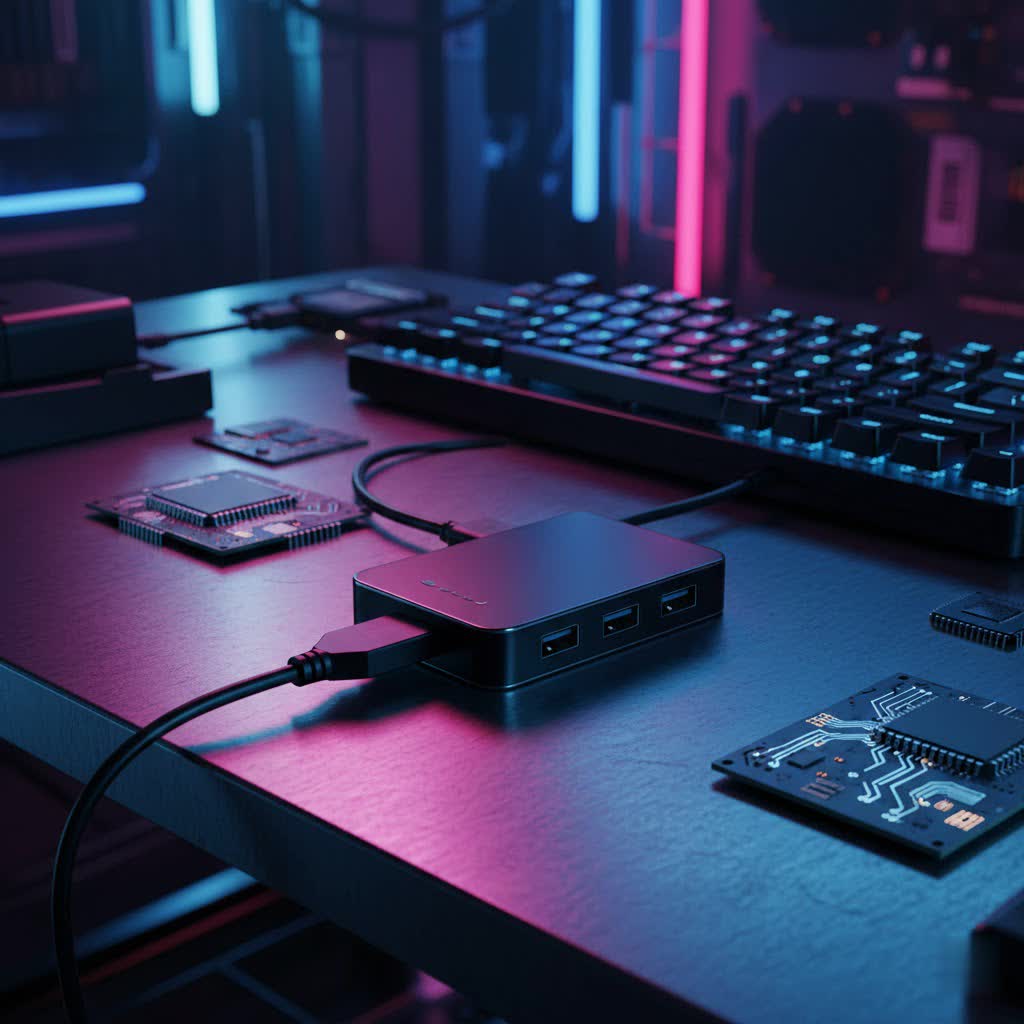
Understanding the USB-C Hub for Laptops
What is a USB-C Hub?
|
Our Picks for the Best USB Hub in 2026
As an Amazon Associate I earn from qualifying purchases.
|
||
| Num | Product | Action |
|---|---|---|
| 1 | Anker 555 USB-C Hub (8-in-1), with 85W Power Delivery, 4K 60Hz HDMI Port, 10Gbps USB C and 2 A Data Ports, Ethernet microSD SD Card Reader, for MacBook Pro More |

|
| 2 | 13 in 1 USB C Docking Station - Dual Monitor, Triple Display, 8 USB C/A Ports, Ethernet, Audio - LIONWEI USB C Hub for MacBook,Dell,HP,Lenovo,Surface |
|
| 3 | USB-C Hub 7-in-1 Multiport Adapter – 4K@30Hz HDMI, USB 3.0, USB 2.0, 100W PD Charging, SD/TF Card Reader – USB-C Docking Station for MacBook Pro/Air, Chromebook, Dell, HP & Type-C Devices |
|
| 4 | UGREEN USB 3.0 Hub, 4 Ports USB A Splitter Ultra-Slim USB Expander for Mouse, Keyboard, Flash Drive, U Disk, Printer Compatible with Laptop, Desktop PC, Xbox, PS5, and More |
|
| 5 | ONFINIO USB Hub 3.0, 7-Port USB Hub Splitter with Individual On/Off Switches and Lights, 3.2ft/1m Long Cable Compatible with MacBook, Laptop, Surface Pro, PS4, PC, Flash Drive, Mobile HDD |
|
| 6 | Acer USB Hub 4 Ports, Multiple USB 3.0 Hub, USBA Splitter for Laptop with Type C Power Port, Extender for A Port Laptop, PC, Desktop and More (2ft) |
|
| 7 | PWAY USB 2.0 Switch, USB Switcher Selector 2 Computers Sharing 4 USB2.0 Ports, KVM Switch Devices Peripheral Hub for Keyboard Mouse Printer Scanner Compatible with Windows Mac Linux |
|
| 8 | Powered USB Hub, Wenter 11-Port USB Splitter Hub (10 Faster Data Transfer Ports+ 1 Smart Charging Port) with Individual LED On/Off Switches, USB Hub 3.0 Powered with Power Adapter for Mac, PC |
|
| 9 | Anker USB Hub 4 Ports, Multiple USB 3.0 Hub, USB Splitter for Laptop, Extender for A Port Laptop, PC, Desktop and More [Charging Not Supported](2ft USB-A) |
|
| 10 | Acer USB C Hub, 7 in 1 Multi-Port Adapter for Laptop, 4K, HDMI Splitter with 2 USB A 3.1 & Type-C to HDMI Data Port, PD 100W Charging, SD Card Reader for Computer, Desktop, Space Grey |
|
A USB-C hub is a compact, multi-port adapter designed to connect various devices to your laptop through a single USB-C port. Essentially, it acts as an expansion dock, taking the limited connectivity of your laptop and multiplying it to accommodate a range of peripherals. These hubs leverage the versatility of the USB-C standard, which supports not only data transfer but also video output and power delivery through a single cable.
The advent of USB-C has streamlined port designs, offering a reversible connector and a powerful underlying technology called USB Power Delivery (USB PD) and DisplayPort Alternate Mode (Alt Mode). This allows USB-C hubs to offer a comprehensive solution for modern laptops, addressing the common problem of insufficient native ports.
Why Do You Need a USB-C Hub for Your Laptop?
The primary reason to invest in a USB-C hub is to overcome the inherent limitations of many modern laptops. As devices become thinner, manufacturers reduce the number of traditional ports like USB-A, HDMI, and Ethernet to maintain a slim profile. A USB-C hub provides a practical and efficient solution for several common scenarios:
- Expanded Connectivity: Connect multiple devices simultaneously, such as a mouse, keyboard, external hard drive, USB flash drives, and even a printer, all through one laptop port. This is crucial for users who rely on a variety of peripherals that are not yet USB-C native.
- External Display Support: Many hubs include HDMI, DisplayPort, or VGA outputs, allowing you to connect one or more external monitors. This is vital for multitasking, graphic design, video editing, or simply enjoying a larger viewing area, turning your laptop into a powerful workstation.
- Reliable Network Access: With integrated Gigabit Ethernet ports, USB-C hubs ensure stable and faster internet connections, bypassing Wi-Fi limitations, which is especially important for gaming, large file transfers, or secure corporate environments.
- Convenient Power Delivery: Many USB-C hubs support Power Delivery (PD), meaning they can charge your laptop while it’s connected to the hub, eliminating the need for a separate charger. This tidies up your desk and ensures your laptop stays powered even with multiple accessories drawing energy.
- Enhanced Productivity: By having all necessary ports readily available, you save time spent plugging and unplugging devices. This creates a seamless workflow, allowing you to focus on your tasks without connectivity interruptions.
- Protect Your Laptop: Forcing your laptop’s native ports to power numerous devices can strain its internal components. A powered USB-C hub can offload this electrical demand, potentially extending your laptop’s battery life and overall longevity.
Exploring Different Types of USB-C Hubs
USB-C hubs come in various configurations, each suited for different needs and budgets. Understanding these types is crucial for making an informed decision.
USB-C Hubs by Connection Standard
The performance of a USB-C hub heavily depends on the USB standard it supports, dictating data transfer speeds and video capabilities.
- USB 3.0 (also known as USB 3.1 Gen 1 or USB 3.2 Gen 1): Offering data transfer speeds of up to 5 Gigabits per second (Gbps), these hubs are suitable for connecting standard peripherals like mice, keyboards, and flash drives. They are an economical choice for basic expansion.
- USB 3.1 Gen 2 (also known as USB 3.2 Gen 2): Stepping up to 10 Gbps, these hubs provide twice the speed of USB 3.0, making them ideal for faster external solid-state drives (SSDs) and more demanding data transfers.
- USB 3.2 Gen 2×2: This less common standard offers 20 Gbps data transfer speeds, suitable for professional users who require very high-speed data access.
- USB4 and Thunderbolt (Thunderbolt 3/4): These represent the pinnacle of USB-C connectivity, offering blazing-fast speeds of up to 40 Gbps. USB4 is built on the Thunderbolt 3 protocol and offers similar performance. Hubs supporting these standards are capable of driving multiple high-resolution (e.g., dual 4K) displays, connecting external GPUs, and handling extreme data loads. Laptops with Thunderbolt ports are often indicated by a small lightning bolt icon next to the USB-C port. These hubs are generally more expensive but offer unparalleled versatility and performance.
USB-C Hubs by Power Source
The way a USB-C hub receives power significantly impacts its performance and the types of devices it can support.
-
Bus-Powered (Unpowered) USB-C Hubs: These hubs draw all their power directly from the laptop’s USB-C port.
- Pros: Highly portable, typically smaller and lighter, no need for an external power adapter.
- Cons: Limited power output, suitable only for low-power devices like mice, keyboards, and small flash drives. Connecting power-hungry devices (e.g., external hard drives, multiple monitors) can drain your laptop’s battery quickly, lead to slower performance, or cause devices to disconnect. They cannot charge your laptop.
- When to Use: Ideal for travelers or minimalist setups where only basic peripheral expansion is needed for short periods.
-
Self-Powered (Powered) USB-C Hubs: These hubs come with their own external power adapter.
- Pros: Provide a consistent and robust power supply to all connected devices, capable of powering multiple high-draw peripherals without taxing your laptop’s battery. Many support Power Delivery (PD) pass-through, allowing them to charge your laptop at high wattages (e.g., 60W, 85W, 100W) while in use. They maintain optimal data transfer speeds even under heavy load.
- Cons: Less portable due to the additional power brick, often larger and more expensive.
- When to Use: Best for desktop setups, connecting power-hungry devices, running multiple external displays, or charging your laptop through the hub. They offer superior stability and performance for professional or intensive use.
USB-C Hubs by Port Configuration and Features
The layout and variety of ports on a USB-C hub are critical to its utility. Hubs are often described by their “X-in-1” configuration, indicating the number of different ports available.
- Basic Expansion Hubs: These might include 2-4 USB-A ports, often alongside a single USB-C port for data or power input. They serve simple connectivity needs.
- Multiport Adapters: Commonly feature 5-8 ports, including multiple USB-A ports (USB 3.0 or 3.1), an HDMI port (often 4K at 30Hz or 60Hz), an SD card reader, a microSD card reader, and a USB-C Power Delivery (PD) input port to charge the laptop.
- Advanced Connectivity Hubs: These can boast 10 or more ports, incorporating Gigabit Ethernet, DisplayPort, additional USB-C data ports, 3.5mm audio jacks, and higher wattage PD for robust power delivery. Some high-end hubs may support dual display output (e.g., two 4K monitors).
USB-C Hubs vs. Docking Stations: A Quick Comparison
While often used interchangeably, USB-C hubs and docking stations serve slightly different purposes, though the line between them can blur.
- USB-C Hubs: Generally more compact and portable, designed for on-the-go or occasional use to expand a few essential ports. They might be bus-powered or self-powered, but typically offer a more limited set of features compared to full docking stations.
- Docking Stations: Usually larger, more expensive, and primarily self-powered. They are designed for fixed desktop setups, offering a comprehensive array of ports, often including support for multiple high-resolution displays, a wider range of legacy ports, and robust power delivery to charge even power-hungry workstations. Docking stations aim to transform a laptop into a complete desktop experience with a single cable connection.
The key takeaway is that hubs prioritize portability and basic expansion, while docking stations focus on maximum connectivity and power for a stationary workstation.
How to Choose the Best USB-C Hub for Your Laptop (Buying Guide)
Selecting the ideal USB-C hub involves a careful assessment of your current and future needs. Here’s a comprehensive guide to help you make an informed decision:
Assess Your Connectivity Needs
Start by listing the devices you need to connect.
- What peripherals do you use? (Mouse, keyboard, external hard drives, flash drives, webcam, microphone).
- Do you need external displays? If so, how many, what resolution (e.g., 1080p, 4K), and refresh rate (e.g., 30Hz, 60Hz) do you require?
- Is a wired internet connection essential? Look for a Gigabit Ethernet port.
- Do you transfer photos or videos from cameras? SD and microSD card slots are critical.
- Do you need to charge your laptop through the hub? Power Delivery (PD) is a must.
- Will you be traveling frequently? Portability will be a major factor.
Verify Laptop Compatibility
Not all USB-C ports are created equal.
- Check your laptop’s USB-C port specifications: Does it support USB 3.0, USB 3.1, USB 3.2, USB4, or Thunderbolt? This determines the maximum speed and capabilities your hub can achieve. A Thunderbolt hub will work with a regular USB-C port (at USB-C speeds), but a regular USB-C hub will not deliver Thunderbolt performance on a Thunderbolt port.
- Power Delivery (PD) input: If you want to charge your laptop via the hub, ensure your laptop’s USB-C port supports PD input, and note the required wattage (e.g., 65W, 85W, 100W). The hub’s PD output should meet or exceed this.
Prioritize Power Delivery (PD)
If you plan to use power-hungry devices or want to charge your laptop through the hub, Power Delivery is non-negotiable.
- A powered hub with a dedicated power adapter offers stable performance and can provide ample power to all connected devices.
- For laptop charging, ensure the hub’s PD pass-through wattage (e.g., 85W from a 100W input) is sufficient for your laptop to charge efficiently. Insufficient power can lead to slow charging warnings or prevent charging altogether.
Select Essential Ports and Features
Choose a hub with the specific port types and quantities you need.
- USB-A Ports: Essential for most legacy peripherals. Consider the USB standard (e.g., USB 3.0 for 5Gbps, USB 3.1 Gen 2 for 10Gbps) for data transfer speeds.
- USB-C Ports: Look for both data-only USB-C ports and USB-C ports with PD input.
- Video Output (HDMI, DisplayPort): Ensure the hub supports the resolution and refresh rate you need (e.g., 4K@60Hz for smooth video, 4K@30Hz for basic display). If you need multiple external monitors, check for multi-display support.
- Ethernet: For reliable wired network access.
- Card Readers: SD and microSD slots are convenient for photographers and content creators.
- Audio Jack: A 3.5mm combo jack can be useful for headphones or microphones.
Consider Build Quality and Brand Reputation
- Durability: Look for hubs made from sturdy materials like aluminum, which also helps with heat dissipation. Avoid flimsy plastic builds that may break easily.
- Heat Management: High-performance hubs, especially those with many features and power delivery, can generate heat. Good design incorporates effective heat dissipation to prevent overheating and ensure longevity.
- Reputable Brands: Brands like Anker, Ugreen, Satechi, and Belkin are well-known for producing reliable USB-C accessories. Reading user reviews can provide insights into a product’s real-world performance and durability.
Conclusion
A USB-C hub is more than just an accessory; it’s a vital tool that enhances the functionality and versatility of modern laptops. By consolidating multiple connections into a single, convenient device, it helps declutter your workspace and unlock your laptop’s full potential. Whether you’re a student, a creative professional, or someone who simply needs more connectivity, the right USB-C hub can significantly improve your daily computing experience.
When selecting your hub, remember to carefully consider your specific needs: the types of devices you use, your display requirements, the importance of power delivery, and your portability preferences. Armed with this knowledge, you can confidently choose a USB-C hub that not only solves your connectivity challenges but also future-proofs your setup.
Are you ready to transform your laptop into a powerhouse workstation or a mobile command center?
Frequently Asked Questions
Is a USB-C hub worth it for my laptop?
Yes, a USB-C hub is highly worth it if your laptop has limited ports, which is common in many modern, thin designs. It allows you to connect multiple peripherals, external monitors, and even power your laptop through a single USB-C port, significantly enhancing productivity and convenience.
Can a USB-C hub charge my laptop?
Many USB-C hubs include a Power Delivery (PD) pass-through port, allowing you to connect your laptop’s charger to the hub and then charge your laptop through the hub itself. Ensure the hub’s PD output wattage matches or exceeds your laptop’s charging requirements for efficient power delivery.
What’s the difference between a USB-C hub and an adapter?
A USB-C adapter typically converts one USB-C port to a single other port type (e.g., USB-C to HDMI). A USB-C hub, on the other hand, is a multi-port device that expands one USB-C port into several different types of ports simultaneously, such as multiple USB-A, HDMI, Ethernet, and card reader slots.
Do all USB-C hubs work with all laptops?
Most USB-C hubs are designed to be universally compatible with laptops that have a functioning USB-C port. However, the performance and available features (like video output resolution or Power Delivery wattage) will depend on the specific capabilities of your laptop’s USB-C port (e.g., supporting DisplayPort Alt Mode or Thunderbolt).
Can I connect multiple monitors to a USB-C hub?
Yes, many advanced USB-C hubs support multiple external monitors. These hubs typically feature two or more video output ports (HDMI, DisplayPort). For dual or triple monitor setups, especially at high resolutions like 4K, ensure the hub and your laptop’s USB-C port (or Thunderbolt port) have sufficient bandwidth and support the necessary display protocols.
