Have you ever found yourself fumbling with cables, constantly plugging and unplugging devices because your PC just doesn’t have enough ports? In today’s digital age, where laptops are thinner and desktops are sleeker, the humble USB hub for PC has become an indispensable tool. It’s the simple, yet powerful, solution to reclaim your connectivity and streamline your workspace. This comprehensive guide will walk you through everything you need to know about USB hubs, from their fundamental purpose to choosing the perfect one to enhance your PC experience.
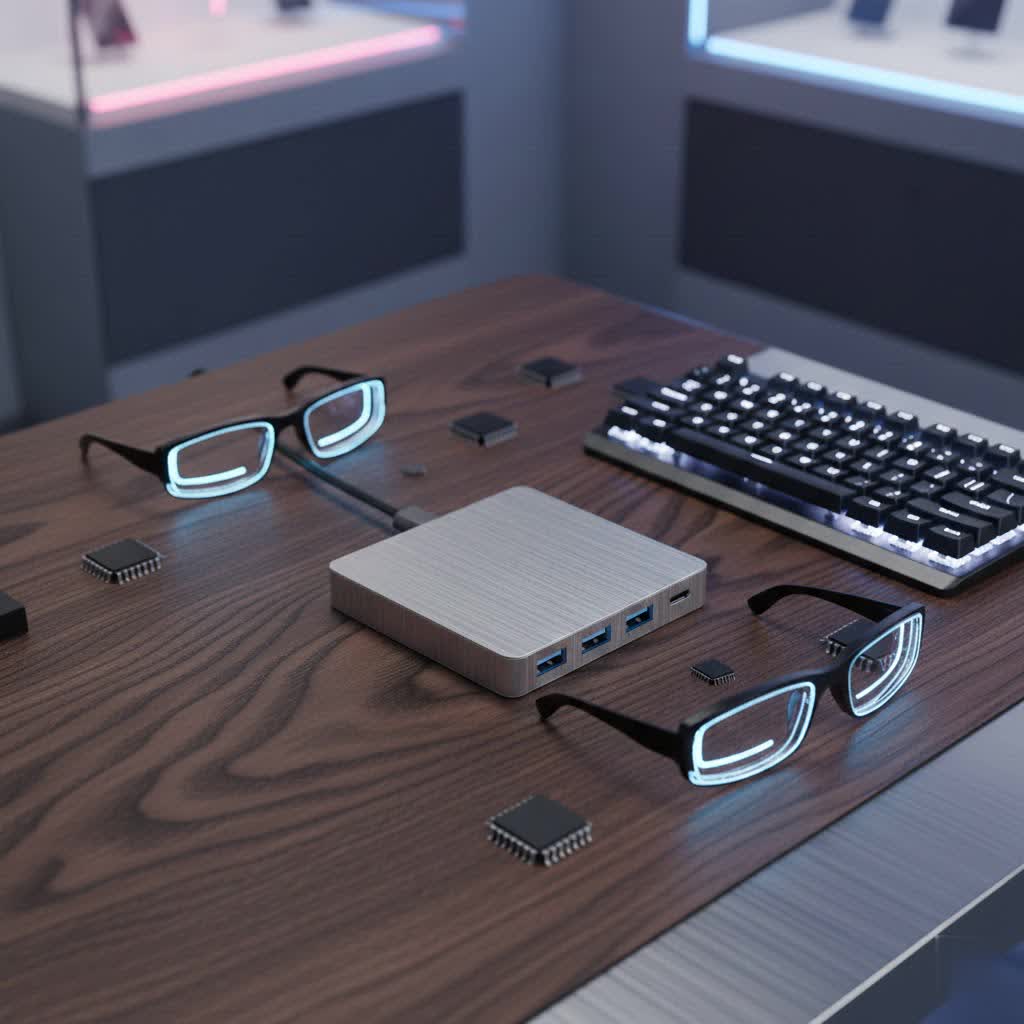
Overview of USB Hubs
What is a USB Hub?
|
Our Picks for the Best USB Hub in 2026
As an Amazon Associate I earn from qualifying purchases.
|
||
| Num | Product | Action |
|---|---|---|
| 1 | Powered USB Hub, Wenter 11-Port USB Splitter Hub (10 Faster Data Transfer Ports+ 1 Smart Charging Port) with Individual LED On/Off Switches, USB Hub 3.0 Powered with Power Adapter for Mac, PC |

|
| 2 | 13 in 1 USB C Docking Station - Dual Monitor, Triple Display, 8 USB C/A Ports, Ethernet, Audio - LIONWEI USB C Hub for MacBook,Dell,HP,Lenovo,Surface |
|
| 3 | Anker 555 USB-C Hub (8-in-1), with 85W Power Delivery, 4K 60Hz HDMI Port, 10Gbps USB C and 2 A Data Ports, Ethernet microSD SD Card Reader, for MacBook Pro More |
|
| 4 | Anker USB Hub 4 Ports, Multiple USB 3.0 Hub, USB Splitter for Laptop, Extender for A Port Laptop, PC, Desktop and More [Charging Not Supported](2ft USB-A) |
|
| 5 | ONFINIO USB Hub 3.0, 7-Port USB Hub Splitter with Individual On/Off Switches and Lights, 3.2ft/1m Long Cable Compatible with MacBook, Laptop, Surface Pro, PS4, PC, Flash Drive, Mobile HDD |
|
| 6 | USB-C Hub 7-in-1 Multiport Adapter – 4K@30Hz HDMI, USB 3.0, USB 2.0, 100W PD Charging, SD/TF Card Reader – USB-C Docking Station for MacBook Pro/Air, Chromebook, Dell, HP & Type-C Devices |
|
| 7 | PWAY USB 2.0 Switch, USB Switcher Selector 2 Computers Sharing 4 USB2.0 Ports, KVM Switch Devices Peripheral Hub for Keyboard Mouse Printer Scanner Compatible with Windows Mac Linux |
|
| 8 | UGREEN USB 3.0 Hub, 4 Ports USB A Splitter Ultra-Slim USB Expander for Mouse, Keyboard, Flash Drive, U Disk, Printer Compatible with Laptop, Desktop PC, Xbox, PS5, and More |
|
| 9 | Acer USB C Hub, 7 in 1 Multi-Port Adapter for Laptop, 4K, HDMI Splitter with 2 USB A 3.1 & Type-C to HDMI Data Port, PD 100W Charging, SD Card Reader for Computer, Desktop, Space Grey |
|
| 10 | Acer USB Hub 4 Ports, Multiple USB 3.0 Hub, USBA Splitter for Laptop with Type C Power Port, Extender for A Port Laptop, PC, Desktop and More (2ft) |
|
A USB hub is a device that expands a single Universal Serial Bus (USB) port on your computer into multiple ports, allowing you to connect several USB devices simultaneously. Think of it as a power strip, but for your digital peripherals. Instead of merely supplying power, a USB hub facilitates data transfer between your computer and all connected gadgets, making it a central point for your device ecosystem. While the core function remains consistent, USB hubs have evolved significantly, offering various speeds, power options, and additional functionalities to meet diverse user needs.
Why You Need a USB Hub for Your PC?
The primary reason to invest in a USB hub is to overcome the common problem of insufficient USB ports on modern computers. With an increasing array of external devices—from mice, keyboards, and external hard drives to printers, webcams, and smartphones—your PC’s native ports can quickly become overwhelmed.
Beyond simply adding more ports, a USB hub offers several key benefits:
- Expanded Connectivity: Connect all your essential peripherals at once, eliminating the constant swapping of devices.
- Convenience and Efficiency: Streamline your workflow by having all your devices readily accessible. No more reaching behind your desktop or struggling with limited laptop ports.
- Reduced Wear and Tear: Protect your computer’s built-in USB ports from damage caused by frequent plugging and unplugging.
- Organized Workspace: A well-placed hub can help manage cable clutter, leading to a cleaner and more efficient desk setup.
- Portability for Laptops: Compact USB-C hubs are perfect for modern ultrabooks and laptops that offer minimal ports, providing essential connections on the go.
Whether you’re setting up a professional workstation, optimizing a gaming rig, or simply enhancing your home office, a USB hub is a small investment that yields significant improvements in productivity and convenience.
Types of USB Hubs for PC
USB hubs come in a variety of configurations, primarily categorized by their connection standard, power source, and the number of ports they offer. Understanding these distinctions is crucial for selecting the right hub for your specific PC setup and requirements.
USB Hubs by Connection Standard
The connection standard dictates the speed and capabilities of the data transfer. Newer standards offer significantly faster speeds, crucial for high-bandwidth devices.
-
USB 2.0:
- Speed: Up to 480 Mbps (Megabits per second).
- Pros: Very affordable, widely compatible with older devices.
- Cons: Significantly slower than modern USB standards, unsuitable for large file transfers or high-bandwidth devices like external SSDs.
- Applications: Ideal for low-bandwidth devices such as keyboards, mice, webcams, and flash drives where speed is not a critical factor.
-
USB 3.0 (also known as USB 3.1 Gen 1 or USB 3.2 Gen 1):
- Speed: Up to 5 Gbps (Gigabits per second).
- Pros: A substantial leap in speed from USB 2.0, backward compatible with USB 2.0 devices, suitable for most external storage and video transfer needs.
- Cons: Slower than the very latest standards if you have cutting-edge peripherals.
- Applications: Excellent for external hard drives, moderate-speed card readers, and other devices requiring faster data throughput than USB 2.0. This is a common and versatile choice for most users.
-
USB 3.1 Gen 2 (also known as USB 3.2 Gen 2):
- Speed: Up to 10 Gbps.
- Pros: Twice the speed of USB 3.0, great for high-performance external SSDs and other demanding peripherals.
- Cons: May be overkill for basic peripherals, typically more expensive than USB 3.0 hubs.
- Applications: Best for users with high-speed external storage, high-resolution webcams, or other devices where 5 Gbps isn’t quite enough.
-
USB 3.2 Gen 2×2:
- Speed: Up to 20 Gbps.
- Pros: Extremely fast, designed for the most demanding data transfer applications.
- Cons: Currently less common in hub form factors, requires compatible PC ports and devices to achieve full speed, often more expensive.
- Applications: Niche professional uses, ultra-fast external storage solutions.
-
USB4 / Thunderbolt 4:
- Speed: Up to 40 Gbps.
- Pros: Represents the pinnacle of USB technology, offering not just data transfer but also power delivery and high-resolution video output (e.g., dual 4K or single 8K displays). Uses the versatile USB-C connector. Often includes additional ports like HDMI, Ethernet, and SD card readers.
- Cons: Requires a PC with a Thunderbolt 4 or USB4 compatible port to unlock full capabilities, generally the most expensive option.
- Applications: Power users, content creators, professionals needing to connect multiple high-bandwidth devices, external monitors, and rapid charging through a single port.
USB Hubs by Power Source
The way a USB hub draws power is a critical factor, especially when connecting multiple devices or power-hungry peripherals.
-
Bus-Powered USB Hubs (Unpowered):
- Pros: Highly portable, compact, and often more affordable as they don’t require an external power adapter.
- Cons: Draws all power directly from the host PC’s USB port, which is then shared among connected devices. Can lead to unstable performance or failure to power devices if total power draw exceeds the host port’s capacity (typically 500mA for USB 2.0, 900mA for USB 3.x).
- When to Use: Best for connecting low-power devices like mice, keyboards, small flash drives, or card readers. Ideal for travel or minimalist setups where only a few light peripherals are needed.
-
Self-Powered USB Hubs (Powered):
- Pros: Comes with its own external AC power adapter, providing a dedicated and consistent power supply to all connected devices. Ensures stable operation and faster charging for power-hungry devices.
- Cons: Less portable due to the need for an external power brick, typically larger and more expensive.
- When to Use: Essential for devices that require significant power, such as external hard drives, printers, scanners, or when connecting multiple devices that collectively draw a lot of power. Also recommended for charging smartphones and tablets at optimal speeds.
USB Hubs by Number of Ports
USB hubs are available with varying numbers of downstream ports, catering to different levels of connectivity needs.
-
4-Port USB Hubs:
- Suitability: Basic expansion for users needing to connect a few extra peripherals like a mouse, keyboard, and a flash drive.
- Common Use: Home users, travel.
-
7-Port USB Hubs:
- Suitability: A good balance for users with a moderate number of devices, allowing for a keyboard, mouse, printer, external drive, and a few other accessories.
- Common Use: Home offices, general desktop use.
-
10-Ports or More USB Hubs:
- Suitability: Designed for professional users, gamers, or anyone with an extensive array of peripherals and accessories.
- Common Use: Content creation workstations, extensive gaming setups, professional offices.
Comparison of Common USB Hub Types
| Feature | USB 2.0 Hub | USB 3.0 Hub (3.1 Gen 1/3.2 Gen 1) | USB 3.1 Gen 2 Hub (3.2 Gen 2) | USB4 / Thunderbolt 4 Hub |
|---|---|---|---|---|
| Max Data Speed | 480 Mbps | 5 Gbps | 10 Gbps | 40 Gbps |
| Upstream Connector | USB-A (often) | USB-A or USB-C | USB-A or USB-C | USB-C |
| Typical Ports | USB-A | USB-A (sometimes USB-C) | USB-A, USB-C (often mixed) | USB-C (Thunderbolt 4 compatible), HDMI, Ethernet, Card Readers |
| Power Options | Bus-powered | Bus-powered or Self-powered | Bus-powered or Self-powered | Self-powered (for full PD/video) |
| Common Application | Basic peripherals | External drives, general use | Fast SSDs, high-bandwidth | Docking station, multiple monitors, professional setups |
| Price Range | Low | Moderate | Moderate to High | High |
| Backward Compatible | N/A | Yes (to USB 2.0) | Yes (to USB 3.0, 2.0) | Yes (to Thunderbolt 3, USB-C) |
USB Hub Buying Guide for PC
Choosing the right USB hub involves more than just picking one with enough ports. A thoughtful approach ensures you get a product that perfectly aligns with your needs and setup.
1. Assess Your Usage Needs
Before anything else, consider what you’ll be connecting.
- What devices do you need to connect? (e.g., mouse, keyboard, external hard drive, printer, webcam, monitor, card reader, flash drive, charging devices).
- How critical is data transfer speed for these devices? (e.g., fast SSDs need higher speeds than a keyboard).
- Do you need to charge devices through the hub?
- Will you be using it on a desktop, or do you need something portable for a laptop?
2. Choose the Right Connection Standard
Align the hub’s USB standard with your PC’s capabilities and your devices’ needs.
- If your PC has USB 3.0 ports and you’re connecting USB 3.0 devices, opt for a USB 3.0 hub to utilize the faster speeds. Using a slower hub (e.g., USB 2.0) will bottleneck your faster devices.
- For modern laptops with only USB-C ports, a USB-C hub is essential. If your PC supports Thunderbolt 4 or USB4, invest in a compatible hub to unlock maximum speed, power delivery, and video output capabilities.
- Remember, newer USB standards are backward compatible, so a USB 3.0 hub will work with USB 2.0 devices, just at the slower 2.0 speed.
3. Determine the Number of Ports
Estimate how many devices you currently need to connect simultaneously, and then add a few extra for future-proofing.
- If you only have a mouse and keyboard, a 4-port hub might suffice.
- For a home office with a printer, external drive, and standard peripherals, a 7-port hub is a safer bet.
- Power users with numerous gadgets, gaming accessories, and external storage may need 10 or more ports, possibly even a multi-function docking station.
4. Consider the Power Source (Powered vs. Unpowered)
This is a crucial decision based on your connected devices’ power requirements.
- Bus-powered (unpowered) hubs are perfect for low-power devices like a mouse, keyboard, or flash drives. They are compact and convenient for travel.
- Self-powered (powered) hubs are vital if you plan to connect power-hungry devices such as external hard drives, optical drives, or charge multiple smartphones/tablets. They provide dedicated power, ensuring stable performance and preventing power-related disconnects.
5. Look for Additional Connectivity
Many USB hubs, especially USB-C and Thunderbolt 4 models, offer more than just extra USB ports.
- Video Output (HDMI/DisplayPort): Essential for connecting external monitors, especially if your laptop has limited video outputs. Check for resolution and refresh rate support (e.g., 4K@60Hz).
- Ethernet Port: Provides a stable, wired internet connection, which is often faster and more reliable than Wi-Fi, especially for laptops that lack a built-in Ethernet port.
- Card Readers (SD/microSD): Convenient for photographers, videographers, or anyone frequently transferring files from memory cards.
- Audio Jacks: Some hubs include 3.5mm audio ports for headphones or microphones.
6. Brand Reputation, Build Quality, and Price
- Reputable Brands: Stick to well-known brands like Anker, Sabrent, UGreen, Plugable, Satechi, and CalDigit, which are known for reliability and customer support.
- Build Quality: Look for hubs made from durable materials like aluminum, especially if you plan to travel with them. Ensure connectors feel solid.
- Price: While it’s tempting to go for the cheapest option, balancing price with features and quality will lead to a more satisfying purchase. A higher price often translates to better components, faster speeds, and more robust power delivery. Reading user reviews can provide valuable insights into real-world performance.
Conclusion
In an increasingly connected world, a high-quality USB hub for your PC is no longer a luxury but a necessity. By expanding your connectivity, optimizing data transfer, and simplifying your workspace, a well-chosen USB hub can significantly enhance your digital life. From powering essential peripherals to supporting multiple high-resolution displays, the right hub empowers you to get the most out of your computer.
Whether you prioritize raw speed, portability, or comprehensive multi-port functionality, there’s a USB hub designed to meet your needs. By carefully considering your devices, power requirements, and the latest connectivity standards, you can confidently select the perfect USB hub to transform your PC setup. What new possibilities will opening up your ports unlock for you?
Frequently Asked Questions
Can a USB hub slow down my computer’s performance?
A USB hub generally does not slow down your computer’s core performance. However, if you connect many high-bandwidth devices (like multiple external SSDs) to a single hub, the total data throughput might be limited by the hub’s upstream connection speed, or the speed of the original USB port it plugs into. For basic peripherals, this effect is negligible.
Is it better to use a powered or unpowered USB hub?
The choice between a powered and unpowered USB hub depends on the devices you plan to connect. Unpowered (bus-powered) hubs are suitable for low-power devices like mice and keyboards and offer portability. Powered (self-powered) hubs, with their own power supply, are essential for connecting power-hungry devices like external hard drives, printers, or for charging multiple devices, ensuring stable operation and optimal performance.
Can I connect a USB hub to another USB hub (daisy-chaining)?
Yes, you can daisy-chain USB hubs, but it’s generally not recommended for optimal performance, especially with bus-powered hubs. Each additional hub in the chain shares the bandwidth and power from the original port, which can lead to reduced speeds and insufficient power for devices further down the chain. It’s best to connect hubs directly to your PC’s ports whenever possible.
