Modern MacBooks, renowned for their sleek designs and powerful performance, often come with a limited number of built-in ports. This scarcity can quickly become a bottleneck for users who rely on multiple external devices, from monitors and external hard drives to keyboards, mice, and memory card readers. If you find yourself constantly juggling dongles or wishing for more connectivity, a Mac USB hub is the essential solution to unlock your workstation’s full potential. This comprehensive guide will navigate the world of USB hubs, helping you understand their types, features, and how to choose the perfect one for your Apple ecosystem.
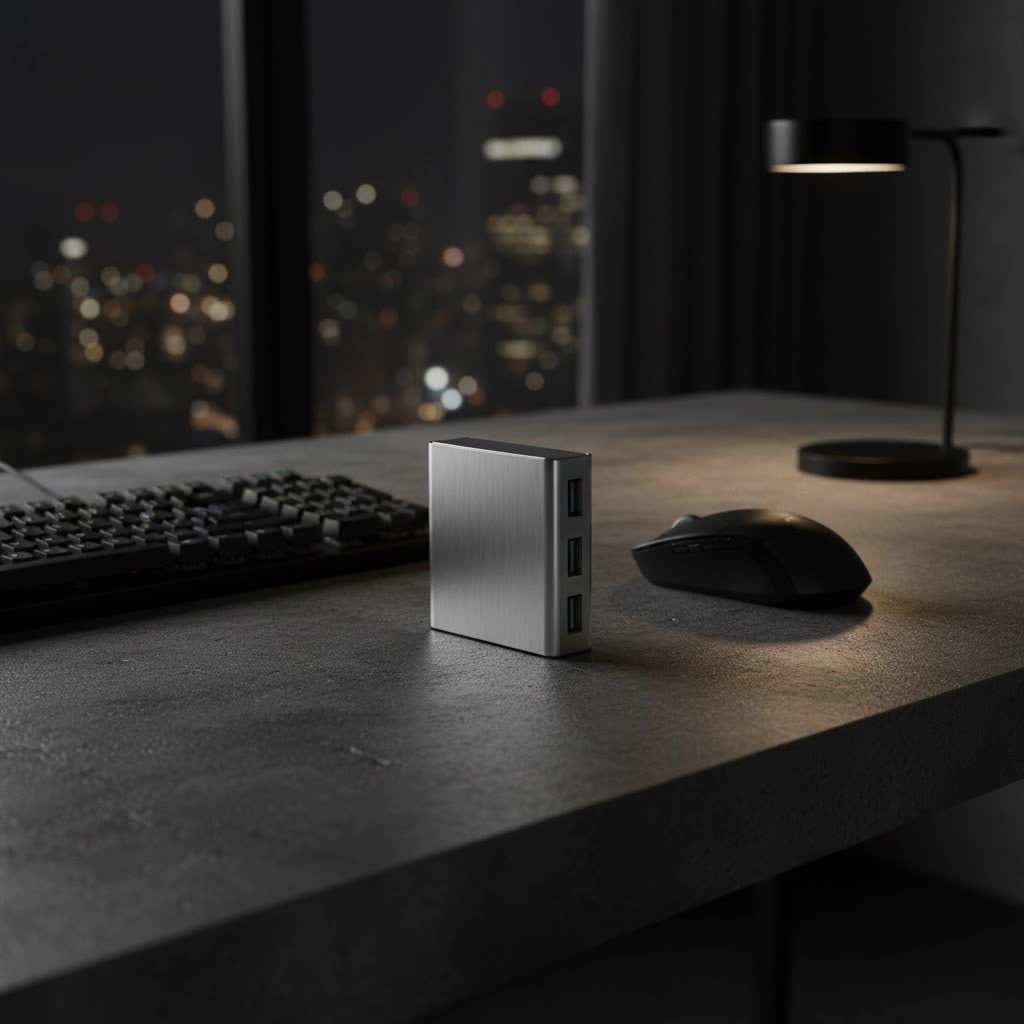
Understanding USB Hubs for Mac
What is a USB Hub?
|
Our Picks for the Best USB Hub in 2026
As an Amazon Associate I earn from qualifying purchases.
|
||
| Num | Product | Action |
|---|---|---|
| 1 | UGREEN USB 3.0 Hub, 4 Ports USB A Splitter Ultra-Slim USB Expander for Mouse, Keyboard, Flash Drive, U Disk, Printer Compatible with Laptop, Desktop PC, Xbox, PS5, and More |

|
| 2 | Acer USB C Hub, 7 in 1 Multi-Port Adapter for Laptop, 4K, HDMI Splitter with 2 USB A 3.1 & Type-C to HDMI Data Port, PD 100W Charging, SD Card Reader for Computer, Desktop, Space Grey |
|
| 3 | PWAY USB 2.0 Switch, USB Switcher Selector 2 Computers Sharing 4 USB2.0 Ports, KVM Switch Devices Peripheral Hub for Keyboard Mouse Printer Scanner Compatible with Windows Mac Linux |
|
| 4 | 13 in 1 USB C Docking Station - Dual Monitor, Triple Display, 8 USB C/A Ports, Ethernet, Audio - LIONWEI USB C Hub for MacBook,Dell,HP,Lenovo,Surface |
|
| 5 | Anker USB Hub 4 Ports, Multiple USB 3.0 Hub, USB Splitter for Laptop, Extender for A Port Laptop, PC, Desktop and More [Charging Not Supported](2ft USB-A) |
|
| 6 | Powered USB Hub, Wenter 11-Port USB Splitter Hub (10 Faster Data Transfer Ports+ 1 Smart Charging Port) with Individual LED On/Off Switches, USB Hub 3.0 Powered with Power Adapter for Mac, PC |
|
| 7 | USB-C Hub 7-in-1 Multiport Adapter – 4K@30Hz HDMI, USB 3.0, USB 2.0, 100W PD Charging, SD/TF Card Reader – USB-C Docking Station for MacBook Pro/Air, Chromebook, Dell, HP & Type-C Devices |
|
| 8 | Anker 555 USB-C Hub (8-in-1), with 85W Power Delivery, 4K 60Hz HDMI Port, 10Gbps USB C and 2 A Data Ports, Ethernet microSD SD Card Reader, for MacBook Pro More |
|
| 9 | Acer USB Hub 4 Ports, Multiple USB 3.0 Hub, USBA Splitter for Laptop with Type C Power Port, Extender for A Port Laptop, PC, Desktop and More (2ft) |
|
| 10 | ONFINIO USB Hub 3.0, 7-Port USB Hub Splitter with Individual On/Off Switches and Lights, 3.2ft/1m Long Cable Compatible with MacBook, Laptop, Surface Pro, PS4, PC, Flash Drive, Mobile HDD |
|
A USB hub is a device that expands a single USB port on your computer into multiple ports, allowing you to connect several peripherals simultaneously. For Mac users, who often face the challenge of having only one or two USB-C/Thunderbolt ports, a hub acts as a crucial bridge, transforming limited connectivity into a versatile workstation. From basic data transfer to advanced video output and power delivery, these compact devices are designed to streamline your setup.
Why Do You Need a USB Hub for Your Mac?
The primary reason Mac users turn to USB hubs is to overcome the inherent limitation of available ports. Newer MacBook models have increasingly favored USB-C and Thunderbolt ports, often at the expense of traditional USB-A, HDMI, and SD card slots. A robust USB hub addresses this by:
- Solving Port Scarcity: Instantly multiplying the number of available ports, enabling simultaneous connection of all your essential devices without constant plugging and unplugging.
- Connecting Multiple Peripherals: Allowing you to use external keyboards, mice, printers, webcams, flash drives, and external hard drives all at once, maximizing your productivity.
- Enhancing Productivity and Convenience: Creating a more organized and efficient workspace, especially for those who frequently connect and disconnect their Mac from a desktop setup or need diverse port options on the go.
Types of USB Hubs for Mac
USB hubs come in various forms, primarily categorized by their connection standards and power sources. Understanding these differences is key to selecting a hub that meets your specific needs.
A. By Connection Standard
The type of USB standard a hub uses dictates its data transfer speeds and capabilities. Modern Macs predominantly use USB-C connectors, which support various underlying protocols, including different USB generations and Thunderbolt.
- USB 2.0: While still present on some older or very basic hubs, USB 2.0 offers a maximum transfer speed of 480 Mbps (60 MB/s). It’s generally too slow for modern external storage or high-bandwidth devices but can suffice for a mouse or keyboard.
- USB 3.0 (USB 3.1 Gen 1 / USB 3.2 Gen 1): These standards all refer to the same 5 Gbps (625 MB/s) transfer speed. They are a significant upgrade from USB 2.0 and are suitable for most common peripherals and external hard drives. Many affordable USB-C hubs incorporate these ports.
- USB 3.1 Gen 2 (USB 3.2 Gen 2): Offering speeds of up to 10 Gbps (1.25 GB/s), these ports are ideal for connecting faster external SSDs or other data-intensive devices where 5 Gbps might be a bottleneck.
- USB4: This is a newer, high-performance standard that leverages the Thunderbolt 3 protocol. USB4 ports offer up to 40 Gbps (5 GB/s) of bandwidth, making them extremely fast and often compatible with Thunderbolt accessories, allowing for single-cable solutions for data, video, and power.
- Thunderbolt (Thunderbolt 3, 4, 5): Developed by Intel and Apple, Thunderbolt ports use the USB-C connector but provide superior performance.
- Thunderbolt 3 & 4: Both offer 40 Gbps (5 GB/s) bandwidth. They support multiple high-resolution external displays (e.g., dual 4K monitors at 60Hz), daisy-chaining multiple devices, and robust power delivery.
- Thunderbolt 5: The latest generation pushes bandwidth to 80 Gbps (10 GB/s), capable of even more demanding setups, including higher resolution and refresh rate displays. Thunderbolt hubs and docks are typically more expensive but offer unparalleled performance for power users. All modern Macs feature Thunderbolt ports.
B. By Power Source
USB hubs can draw power in two main ways, impacting their stability and the types of devices they can support.
- Bus-Powered USB Hubs: These hubs draw all their power directly from the host Mac’s USB port. They are typically compact and highly portable, making them excellent for on-the-go use with low-power devices like flash drives, keyboards, or mice. However, they may not provide enough power for high-demand devices (e.g., external hard drives, multiple charging devices) and can sometimes lead to unstable connections or slower performance if overloaded.
- Self-Powered USB Hubs: Also known as “powered USB hubs,” these devices come with their own external power adapter. They provide a dedicated power supply to all connected devices, ensuring stable performance, especially when connecting power-hungry peripherals like external HDDs, printers, or multiple devices simultaneously. While less portable due to the extra power brick, they are essential for creating a reliable and high-performance desktop setup.
C. By Port Count and Features
USB hubs vary widely in their port configurations and additional functionalities, catering to different user needs.
- Common Port Configurations: Hubs can range from simple 4-port models suitable for basic expansion to more extensive 7-port, 10-port, or even larger configurations designed for comprehensive workstation setups.
- Key Features to Consider:
- HDMI/DisplayPort: Crucial for connecting external monitors. Look for hubs that support 4K resolution at 60Hz for a smooth visual experience, as some budget options might be limited to 30Hz. Higher-end Thunderbolt docks can support dual 4K or even 8K displays.
- Ethernet Port: Provides a stable, high-speed wired internet connection (typically Gigabit Ethernet, with some advanced hubs offering 2.5 Gigabit Ethernet), often superior to Wi-Fi for tasks requiring consistent bandwidth.
- SD/MicroSD Card Readers: Indispensable for photographers and videographers. Look for hubs with UHS-II support (312 MB/s) if you frequently transfer large files from professional cameras, as basic UHS-I readers (104 MB/s) can be a bottleneck.
- Power Delivery (PD) Pass-through: Many USB-C hubs allow you to charge your Mac through the hub itself, freeing up your Mac’s native port. Look for hubs offering at least 60W, 85W, or even 100W PD to ensure your MacBook charges efficiently, especially under heavy load.
USB-C Hub vs. Thunderbolt Dock: A Mac User’s Dilemma
While both USB-C hubs and Thunderbolt docks utilize the versatile USB-C connector, they offer distinct capabilities, making the choice dependent on your specific workflow and budget.
The fundamental difference lies in bandwidth and underlying technology. USB-C is a physical connector that can carry various protocols, including standard USB and the more advanced Thunderbolt.
-
USB-C Hubs: These are generally more compact and budget-friendly. They primarily use USB 3.x standards (5-10 Gbps) for data transfer. USB-C hubs are excellent for basic port expansion, connecting a single external display (often limited to 4K@30Hz unless the hub explicitly states 4K@60Hz and your Mac supports DP 1.4), and charging low to moderate power devices. They are a practical solution for portability and general office tasks.
-
Thunderbolt Docks: Designed for power users and professionals, Thunderbolt docks leverage the superior bandwidth of Thunderbolt (40-80 Gbps). This allows them to support:
- Multiple High-Resolution Displays: Easily connect two 4K monitors at 60Hz or even an 8K display, often without relying on specialized software drivers.
- High-Speed Data Transfer: Ideal for external Thunderbolt SSDs that can rival or exceed your Mac’s internal drive speeds.
- Daisy-Chaining: Connect multiple Thunderbolt devices in a chain, all via a single cable to your Mac.
- Robust Power Delivery: Often feature their own dedicated power supply, ensuring ample and stable power for all connected devices and fast charging for your MacBook.
> “While USB-C hubs offer essential port expansion, Thunderbolt docks truly unlock the full potential of your Mac’s single port, especially for professional workflows requiring multiple high-resolution displays and lightning-fast data transfer.” – Admin, reviewhaat.com
Compatibility: All modern Macs feature Thunderbolt ports, which are fully backward compatible with USB-C devices. This means a USB-C hub will work in a Thunderbolt port, but it will operate at USB-C speeds and capabilities, not Thunderbolt’s higher performance. To benefit from Thunderbolt’s full power, you need a Thunderbolt dock.
Choosing the Right Mac USB Hub: A Buying Guide
Selecting the best USB hub for your Mac involves a careful assessment of your needs and the hub’s specifications.
1. Assess Your Needs
Start by evaluating your current and future connectivity requirements:
- What devices do you need to connect? (e.g., keyboard, mouse, external SSD, printer, webcam, second monitor, audio interface).
- How important is data transfer speed? For casual use with basic peripherals, 5 Gbps USB 3.0 ports are fine. For video editing or large file transfers to an external SSD, 10 Gbps USB 3.1 Gen 2, USB4, or Thunderbolt is crucial.
- Do you need portability or a static workstation setup? Compact, bus-powered hubs are great for travel, while self-powered docks are better for permanent desk setups.
2. Check Your Mac’s Ports
Understand the ports on your specific Mac model (MacBook Air, MacBook Pro, Mac mini, iMac). Newer Macs typically feature Thunderbolt 3, 4, or USB4 ports (all using the USB-C connector). To maximize performance, choose a hub with a connection standard that matches or exceeds your Mac’s capabilities. For example, if your Mac has Thunderbolt 4, a Thunderbolt 4 hub will offer optimal performance.
3. Consider Power Requirements
- If you only connect low-power devices like a mouse, keyboard, or flash drive, a bus-powered USB-C hub is sufficient and convenient.
- If you plan to connect power-hungry devices (e.g., external hard drives, multiple monitors, charging multiple devices), a self-powered USB hub with its own power adapter is highly recommended to ensure stable performance and prevent connectivity issues.
- Look for Power Delivery (PD) pass-through if you want the hub to charge your Mac. Ensure the PD wattage (e.g., 85W, 100W) is sufficient for your MacBook model, especially under heavy use.
4. Essential Features to Look For
Prioritize the features that are most critical for your workflow:
- Video Output: For external displays, aim for at least HDMI 2.0 or DisplayPort 1.4 to support 4K resolution at 60Hz. If you need dual external monitors on an M1/M2/M3 MacBook Air or base MacBook Pro (which natively support only one external display), you may need a hub or dock that uses DisplayLink technology or a Thunderbolt dock.
- Ethernet Port: Essential for a stable and fast internet connection, especially for large downloads, online gaming, or video conferencing.
- Card Readers: If you work with cameras, look for both standard SD and microSD card slots. For professionals, UHS-II speeds are a significant advantage.
- Number and Type of USB Data Ports: Ensure a good mix of USB-A and USB-C data ports, with speeds (5 Gbps, 10 Gbps) appropriate for your peripherals.
5. Brand Reputation and Price
Invest in a hub from a reputable brand known for quality and reliability with Mac products. Brands like Anker, Satechi, UGREEN, CalDigit, and Belkin are often highly rated for their USB hubs and docks. Read user reviews to gauge real-world performance and durability. While cheaper options exist, they often compromise on build quality, port speeds, or power delivery stability.
Conclusion
A high-quality USB hub is an indispensable accessory for any Mac user looking to expand their connectivity, enhance productivity, and create a more versatile workspace. By understanding the different types of hubs, their connection standards, power requirements, and essential features, you can make an informed decision that perfectly aligns with your Mac setup and workflow. Whether you need a simple, portable adapter for basic peripherals or a powerful Thunderbolt dock for a multi-monitor workstation, the right USB hub will transform your Mac experience.
What connectivity challenges are you hoping to solve with your next Mac USB hub?
Frequently Asked Questions
What’s the difference between a USB hub and a docking station?
While often used interchangeably, a USB hub typically offers basic port expansion from a single host port and may or may not have its own power supply. A docking station, especially a Thunderbolt dock, is usually more robust, self-powered, and provides a wider array of high-bandwidth ports (like multiple video outputs, high-speed Ethernet, numerous USB ports) to effectively turn a laptop into a full desktop workstation.
Can a USB-C hub charge my MacBook?
Many USB-C hubs feature a “Power Delivery” (PD) pass-through port. If you connect your Mac’s power adapter to this port, the hub can charge your MacBook while also providing power to connected peripherals. Always check the hub’s specifications for the maximum PD wattage to ensure it’s sufficient for your Mac.
Why isn’t my Mac recognizing my USB hub?
If your Mac isn’t recognizing your USB hub, first check that the hub is securely plugged into your Mac and, if it’s a powered hub, that its power adapter is connected to a working outlet. Try connecting the hub to a different port on your Mac or testing it with another computer. Outdated macOS versions, incompatible drivers, or a faulty hub/cable can also cause recognition issues. Ensure your macOS is up to date.
Do I need a powered USB hub for my Mac?
You need a powered USB hub if you plan to connect power-intensive devices such as external hard drives, optical drives, or multiple peripherals that draw significant power. A bus-powered hub (one without a separate power adapter) might not supply enough power, leading to unstable connections, slower data transfers, or devices not being recognized.
Can I connect multiple monitors with a USB hub on my Mac?
Yes, but with caveats. Standard USB-C hubs typically support one external display, often limited to 4K at 30Hz or 60Hz depending on the hub’s capabilities and your Mac’s DisplayPort Alt Mode support. For connecting two or more external monitors on Macs that natively support only one (like M1/M2 MacBook Air or base MacBook Pro models), you’ll likely need a Thunderbolt dock or a specialized USB-C hub that utilizes DisplayLink technology, which requires a software driver installation.
