In today’s interconnected digital world, relying on a single, often limited, set of USB ports on your computer can quickly become a bottleneck. Whether you’re a seasoned technician, a creative professional, or simply someone juggling multiple peripherals, the frustration of “not enough ports” is universally understood. That’s where a USB expansion hub steps in as your digital savior, transforming one lonely port into a bustling hub of activity. This comprehensive guide will demystify the world of USB hubs, helping you navigate the various types, understand their capabilities, and ultimately choose the perfect expansion solution to optimize your workflow and connect all your essential devices with ease.
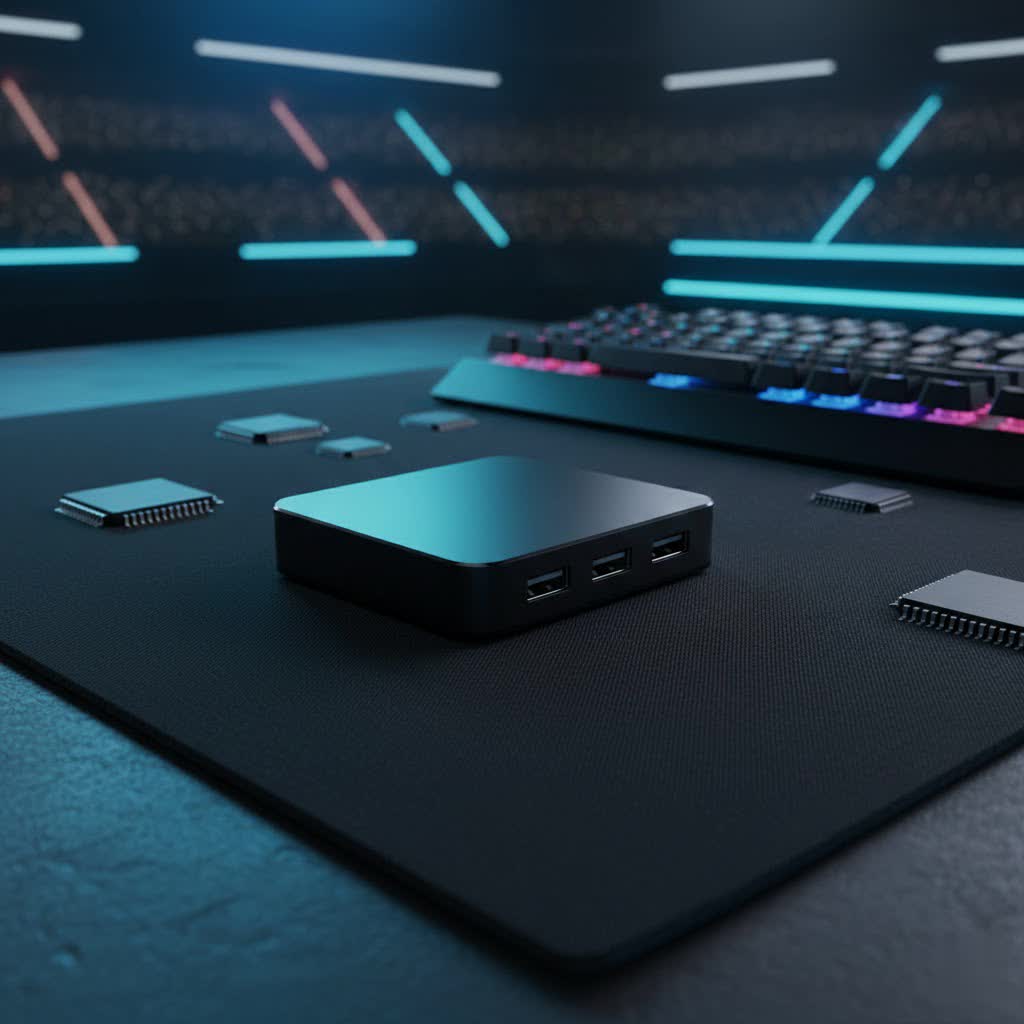
Overview of USB Hubs
What is a USB Hub?
|
Our Picks for the Best USB Hub in 2026
As an Amazon Associate I earn from qualifying purchases.
|
||
| Num | Product | Action |
|---|---|---|
| 1 | PWAY USB 2.0 Switch, USB Switcher Selector 2 Computers Sharing 4 USB2.0 Ports, KVM Switch Devices Peripheral Hub for Keyboard Mouse Printer Scanner Compatible with Windows Mac Linux |

|
| 2 | Acer USB Hub 4 Ports, Multiple USB 3.0 Hub, USBA Splitter for Laptop with Type C Power Port, Extender for A Port Laptop, PC, Desktop and More (2ft) |
|
| 3 | 13 in 1 USB C Docking Station - Dual Monitor, Triple Display, 8 USB C/A Ports, Ethernet, Audio - LIONWEI USB C Hub for MacBook,Dell,HP,Lenovo,Surface |
|
| 4 | Powered USB Hub, Wenter 11-Port USB Splitter Hub (10 Faster Data Transfer Ports+ 1 Smart Charging Port) with Individual LED On/Off Switches, USB Hub 3.0 Powered with Power Adapter for Mac, PC |
|
| 5 | Anker USB Hub 4 Ports, Multiple USB 3.0 Hub, USB Splitter for Laptop, Extender for A Port Laptop, PC, Desktop and More [Charging Not Supported](2ft USB-A) |
|
| 6 | Anker 555 USB-C Hub (8-in-1), with 85W Power Delivery, 4K 60Hz HDMI Port, 10Gbps USB C and 2 A Data Ports, Ethernet microSD SD Card Reader, for MacBook Pro More |
|
| 7 | Acer USB C Hub, 7 in 1 Multi-Port Adapter for Laptop, 4K, HDMI Splitter with 2 USB A 3.1 & Type-C to HDMI Data Port, PD 100W Charging, SD Card Reader for Computer, Desktop, Space Grey |
|
| 8 | UGREEN USB 3.0 Hub, 4 Ports USB A Splitter Ultra-Slim USB Expander for Mouse, Keyboard, Flash Drive, U Disk, Printer Compatible with Laptop, Desktop PC, Xbox, PS5, and More |
|
| 9 | ONFINIO USB Hub 3.0, 7-Port USB Hub Splitter with Individual On/Off Switches and Lights, 3.2ft/1m Long Cable Compatible with MacBook, Laptop, Surface Pro, PS4, PC, Flash Drive, Mobile HDD |
|
| 10 | USB-C Hub 7-in-1 Multiport Adapter – 4K@30Hz HDMI, USB 3.0, USB 2.0, 100W PD Charging, SD/TF Card Reader – USB-C Docking Station for MacBook Pro/Air, Chromebook, Dell, HP & Type-C Devices |
|
A USB hub is a device that expands a single Universal Serial Bus (USB) port on your computer into multiple ports, allowing you to connect several peripheral devices simultaneously. Think of it as an electrical power strip, but for your data and power connections. Instead of constantly plugging and unplugging devices, a hub provides a centralized point for all your USB gadgets, from mice and keyboards to external hard drives and printers. The core function is to facilitate communication between your computer and multiple USB devices, managing data flow and power distribution efficiently.
The evolution of USB technology has been rapid, with hubs adapting to each new standard. From the early days of USB 1.0 offering basic connectivity, we’ve seen a progression through USB 2.0, USB 3.x, and now USB4, each iteration bringing significant improvements in speed, power delivery, and versatility. This continuous development has made USB hubs indispensable tools for anyone looking to maximize their computer’s connectivity potential.
Why Use a USB Hub?
The primary reason to use a USB expansion hub is to overcome the inherent limitation of physical ports on modern computers, especially laptops, which often sacrifice port quantity for sleek design. As we rely on more external devices—from ergonomic keyboards and high-precision mice to external SSDs for backup and webcams for virtual meetings—the demand for USB ports quickly outstrips supply. A hub solves this by providing instant expansion, ensuring all your peripherals can be connected and ready to use without a constant shuffle.
Beyond mere port multiplication, USB hubs significantly enhance convenience and work efficiency. They consolidate connections, reducing cable clutter and simplifying your setup. Imagine having your entire desk periphery connected to a single hub, which then connects to your laptop with just one cable. This streamlined approach makes it incredibly easy to switch between workstations, travel with your setup, or simply maintain an organized workspace, boosting productivity by eliminating connection hassles.
Types of USB Hubs
USB expansion hubs come in various forms, each designed to meet specific needs and compatible with different technological standards. Understanding these categories is crucial for selecting a hub that perfectly aligns with your current setup and future requirements.
USB Hubs by Connection Standard
The USB standard dictates the speed and power capabilities of a hub. Choosing the right standard ensures optimal performance for your connected devices.
-
USB 2.0: This older standard offers data transfer speeds of up to 480 Mbps. While significantly slower than modern standards, USB 2.0 hubs are still perfectly adequate for low-bandwidth devices like keyboards, mice, printers, and older flash drives. Their main advantages are affordability and broad compatibility with virtually any computer or device. However, for data-intensive tasks, they will feel sluggish.
-
USB 3.0 (also known as USB 3.1 Gen 1 or USB 3.2 Gen 1): This standard brought a major leap in speed, offering up to 5 Gbps (Gigabits per second) – ten times faster than USB 2.0. USB 3.0 hubs are ideal for connecting external hard drives, high-resolution webcams, and faster flash drives, where quicker data transfer is beneficial. They are backward compatible with USB 2.0 devices, meaning older peripherals will still work, albeit at USB 2.0 speeds.
-
USB 3.1 Gen 2 (also known as USB 3.2 Gen 2): Doubling the speed of USB 3.0, this standard provides transfer rates of up to 10 Gbps. These hubs are excellent for power users and professionals who regularly transfer large files, such as video editors or photographers working with external SSDs. They offer a noticeable performance upgrade for demanding peripherals and maintain backward compatibility.
-
USB 3.2 Gen 2×2: This standard further boosts performance by utilizing two lanes of 10 Gbps for a combined speed of 20 Gbps. While still less common, hubs supporting USB 3.2 Gen 2×2 are at the forefront of USB-A/USB-C connectivity, offering blazing-fast speeds for the most demanding storage solutions. It requires a compatible host port to achieve its full potential.
-
USB 4: The latest iteration, USB4, significantly enhances capabilities, especially when implemented over a USB-C connector. It supports speeds of up to 40 Gbps, matching Thunderbolt 3, and can dynamically allocate bandwidth for data and video. USB4 hubs are ideal for high-performance external SSDs, multiple 4K displays, and intricate workstation setups, offering incredible versatility and speed, and are backward compatible with older USB and Thunderbolt 3 devices.
-
Thunderbolt: Developed by Intel, Thunderbolt technology offers even higher bandwidth than most USB standards, with Thunderbolt 3 and 4 delivering up to 40 Gbps. Thunderbolt hubs (often called docking stations) are premium devices ideal for professionals needing to connect multiple high-resolution monitors, external GPUs, and extremely fast storage arrays through a single cable. While more expensive, they offer unparalleled performance and advanced features like power delivery and daisy-chaining, but require a Thunderbolt-compatible port on your computer.
USB Hubs by Power Source
How a USB hub gets its power significantly impacts its performance and the types of devices it can support.
-
Bus-powered USB Hubs: These hubs draw all their power directly from the host computer’s USB port. They are typically compact, highly portable, and do not require an external power adapter, making them convenient for on-the-go use. However, their power output is limited by the host port, usually around 500mA for USB 2.0 and 900mA for USB 3.x. This makes them suitable for low-power devices like mice, keyboards, and flash drives. Connecting power-hungry devices like external hard drives or charging smartphones to a bus-powered hub can lead to instability, slow performance, or even device failure due to insufficient power.
-
Self-powered USB Hubs (Powered Hubs): These hubs come with their own dedicated external power adapter, allowing them to draw power directly from a wall outlet. This independent power supply means they can deliver full power to each connected port, typically 1.5A or more per port, regardless of the host computer’s capabilities. Self-powered hubs are essential for connecting multiple power-hungry devices, ensuring stable operation and optimal performance for external hard drives, optical drives, printers, and for charging mobile devices efficiently. While less portable due to the extra adapter, they offer superior reliability and performance for complex setups.
USB Hubs by Port Quantity
The number of ports on a USB hub should align with your current needs and allow for future expansion.
-
USB Hubs with 4 Ports: These are the most common and often sufficient for basic expansion. They are perfect for users who need to connect a few essential peripherals like a mouse, keyboard, printer, and a flash drive. Their compact size makes them great for travel or minimalist desk setups.
-
USB Hubs with 7 Ports: Offering a significant step up in connectivity, 7-port hubs cater to users with a moderate number of peripherals. They provide enough room for standard desk accessories, a webcam, and perhaps a couple of external drives without needing to constantly swap devices. These are often a good balance between expansion and desk footprint.
-
USB Hubs with 10 Ports or More: Designed for power users, professionals, or those with extensive peripheral ecosystems, these high-capacity hubs provide ample connectivity for complex workstations. They are ideal for users who need to connect multiple external hard drives, various creative tools (drawing tablets, MIDI controllers), multiple charging cables, and other specialized equipment simultaneously. These are almost exclusively self-powered to ensure stable operation for all connected devices.
Comparison Table for USB Hubs
To help you make an informed decision, here’s a detailed comparison of different USB hub types based on key criteria:
| Feature | USB 2.0 Hub | USB 3.0/3.1 Gen 1 Hub | USB 3.1 Gen 2 Hub | USB 3.2 Gen 2×2 Hub | USB 4 Hub | Thunderbolt Hub |
|---|---|---|---|---|---|---|
| Max Data Speed | 480 Mbps | 5 Gbps | 10 Gbps | 20 Gbps | 40 Gbps | 40 Gbps |
| Connector Type (Common) | USB-A | USB-A, USB-C | USB-A, USB-C | USB-C | USB-C | USB-C |
| Backward Compatibility | N/A | USB 2.0 | USB 3.0, 2.0 | USB 3.1 Gen 2, 3.0, 2.0 | USB 3.x, 2.0, TB3 | USB 3.x, 2.0 (TB4) |
| Power Delivery | Basic | Basic (900mA) | Enhanced (up to 100W PD via USB-C) | High (up to 100W PD) | High (up to 100W PD) | Very High (up to 100W PD) |
| Ideal Use Cases | Keyboard, mouse, printer | External HDD, flash drives, webcam | Faster SSDs, high-res cameras | High-speed storage arrays | Multiple 4K displays, NVMe enclosures | Dual 4K/5K displays, eGPUs, professional storage |
| Power Source | Bus-powered (often), Self-powered | Bus-powered, Self-powered | Bus-powered, Self-powered | Self-powered recommended | Self-powered recommended | Self-powered (docking station) |
| Cost | Low | Moderate | Moderate to High | High | Very High | Premium |
| Compatibility | Universal | Universal (with USB 3.0+) | Modern devices (with USB 3.1 G2+) | Latest PCs/laptops (with 3.2 G2x2) | Latest PCs/laptops (with USB4) | Latest PCs/laptops (with Thunderbolt) |
| Durability/Design | Basic plastic, portable | Various, often compact | Robust, often metal chassis | Premium build quality | Premium build quality | Professional grade, robust |
Buying Guide for USB Hubs
Choosing the right USB expansion hub doesn’t have to be complicated. By considering a few key factors, you can find a device that perfectly fits your needs, budget, and existing setup.
Identify Your Needs
Before diving into specifications, take a moment to assess what you truly need from a USB hub.
- What types of devices do you need to connect? (e.g., just a mouse and keyboard, or demanding external SSDs and multiple monitors?)
- How critical is data transfer speed for your daily tasks? (Are you transferring large video files, or just occasionally saving documents?)
- Do you need to travel frequently with your hub, or will it remain stationary on your desk? Portability might influence your choice between bus-powered and self-powered options.
Clearly defining your use case will narrow down your options significantly.
Choose the Right Connection Standard
Your computer’s available USB ports will heavily influence your choice. If you have older USB 2.0 ports, a USB 3.0 hub will still function, but it will be limited to USB 2.0 speeds.
- Always try to match or exceed your computer’s fastest available USB standard. If your laptop has a USB-C port that supports USB 3.1 Gen 2 or higher, investing in a compatible hub will unlock its full potential. Conversely, purchasing an expensive USB4 hub for a computer with only USB 3.0 ports might be overkill, as you won’t experience the higher speeds. Prioritize backward compatibility to ensure all your existing devices work.
Select the Appropriate Port Quantity
Counting your current devices and anticipating future additions is essential.
- Estimate the number of devices you currently need to connect simultaneously. Then, add a few extra ports for future expansion or unexpected needs. It’s often better to have a couple of spare ports than to constantly wish for one more. A 4-port hub might suffice for a basic setup, while a 7-port or 10-port hub is better for a comprehensive workstation.
Decide on Power Source: Powered vs. Bus-Powered
This is a critical decision, especially if you plan to connect power-hungry devices.
- If you primarily connect low-power devices such as a mouse, keyboard, or flash drives, a more portable, bus-powered hub should be sufficient.
- However, if you intend to connect external hard drives, charge smartphones, run printers, or use multiple high-draw peripherals, a self-powered hub with its own power adapter is almost mandatory. This ensures stable power delivery to all devices, preventing performance issues or data corruption.
Consider Brand and Price
Investing in a reputable brand often translates to better quality, reliability, and customer support.
- Research well-known USB hub brands that have a track record of producing durable and high-performing products. While budget-friendly options exist, extremely cheap hubs may compromise on build quality, data transfer stability, or power delivery.
- Read user reviews to gauge real-world performance and reliability. Compare features and prices across several trusted brands to find a product that offers the best value for your specific requirements.
Top Picks USB Hub (Generic examples based on common categories)
While specific product recommendations can quickly become outdated, understanding the types of hubs that excel in different scenarios can guide your choice.
- Best for Portability & Basic Expansion (Bus-Powered): Look for compact, durable USB-A or USB-C hubs (often 4-port USB 3.0). These are perfect for travelers or minimalists needing to connect a mouse, keyboard, and a flash drive on the go. They prioritize size and convenience.
- Best for Versatile Desktop Use (Self-Powered USB 3.0/3.1 Gen 2): A 7- to 10-port powered hub with USB 3.x speeds is ideal for most home or office users. It provides ample connectivity for multiple external drives, charging devices, and other peripherals, ensuring stable power and good data transfer rates. Often, these include a mix of USB-A and USB-C ports.
- Best for High-Performance Workstations (USB4/Thunderbolt): For professionals demanding maximum bandwidth for multiple 4K displays, external SSDs, or eGPUs, a Thunderbolt 4 or USB4 docking station/hub is the ultimate choice. These typically feature robust builds, numerous ports (including video outputs, Ethernet, SD card slots), and significant power delivery capabilities, all through a single cable to your compatible laptop.
Conclusion
The USB expansion hub, once a simple solution for a few extra ports, has evolved into a sophisticated device capable of powering and connecting your entire digital ecosystem. From the reliable, affordable USB 2.0 hubs to the blazing-fast, multi-functional USB4 and Thunderbolt docks, there’s a perfect expansion hub out there for every user and every need. By understanding the different connection standards, power requirements, and port quantities, you can confidently select a hub that not only solves your immediate connectivity challenges but also enhances your overall computing experience. Don’t let limited ports hinder your productivity or creativity any longer.
What’s the next device you’re excited to connect to your newly expanded workstation?
Frequently Asked Questions
Do USB hubs slow down the speed of my devices?
A well-designed USB hub, especially one that matches or exceeds the USB standard of your connected devices and computer, should not significantly slow down performance. However, if you connect many high-bandwidth devices (like multiple external SSDs) to a single hub simultaneously, the total available bandwidth of the hub’s upstream port might be shared, potentially leading to a slight reduction in individual device speeds. Bus-powered hubs can also suffer from slower speeds if they cannot provide enough power to all devices.
What is the difference between a USB hub and a docking station?
While both expand connectivity, a USB hub primarily adds more USB ports. A docking station, often more expensive and robust, typically offers a broader range of ports beyond just USB, including video outputs (HDMI, DisplayPort), Ethernet, audio jacks, and card readers, along with significant power delivery to charge laptops. Docking stations are designed for more comprehensive workstation setups, often connecting to a laptop via a single USB-C or Thunderbolt cable.
Can I charge my phone or tablet with a USB hub?
Yes, most USB hubs can charge phones and tablets. However, the charging speed will vary significantly. Bus-powered hubs often provide standard charging speeds, similar to slow wall chargers. Self-powered hubs, especially those with dedicated charging ports or USB Power Delivery (PD) capabilities via USB-C, can offer much faster charging speeds, closer to what you’d get from a tablet’s original charger. Always check the hub’s power output specifications.
Is it safe to leave a USB hub constantly plugged in?
Yes, it is generally safe to leave a USB hub plugged into your computer and a wall outlet (if it’s a powered hub). Modern USB hubs are designed for continuous operation. It’s good practice to ensure the hub is from a reputable brand and that all connected devices are stable. Disconnecting an external hard drive safely before shutting down your computer is always recommended, regardless of whether it’s connected directly or via a hub.
How do I know if my computer has USB-C, USB 3.0, or Thunderbolt?
The physical shape of the port can indicate USB-C (small, oval, reversible), while USB-A ports (larger, rectangular) are often color-coded: black or white for USB 2.0, blue for USB 3.0/3.1 Gen 1, teal or red for USB 3.1 Gen 2. For definitive information on standards (like USB 3.1 Gen 2, USB4, or Thunderbolt), check your computer’s specifications on the manufacturer’s website or in your operating system’s device manager. Thunderbolt ports often have a lightning bolt icon next to them.
